Night Macro Photography: How to Photograph Frogs and Snakes After Dark
By Lior Berman · · 3 min read
The short answer: a 90-105mm macro lens, one off-camera flash with a large diffuser, a headlamp, manual settings around 1/200 s, f/8 and ISO 200, and the patience to let the animal stay where it chose to sit.
Most of the rainforest's frogs, snakes and salamanders come out after dark. Night herping, searching for reptiles and amphibians, is slow work with a headlamp and a macro lens, and it gives you subjects you will never see by day. This guide covers the gear, the settings and the light, and how to work safely around animals that are small, fragile and sometimes venomous.
The gear: three things
A 90-105mm macro lens. Fills the frame with a two-centimetre frog from a comfortable distance. That distance keeps the frog calm and keeps you away from a viper's strike range.
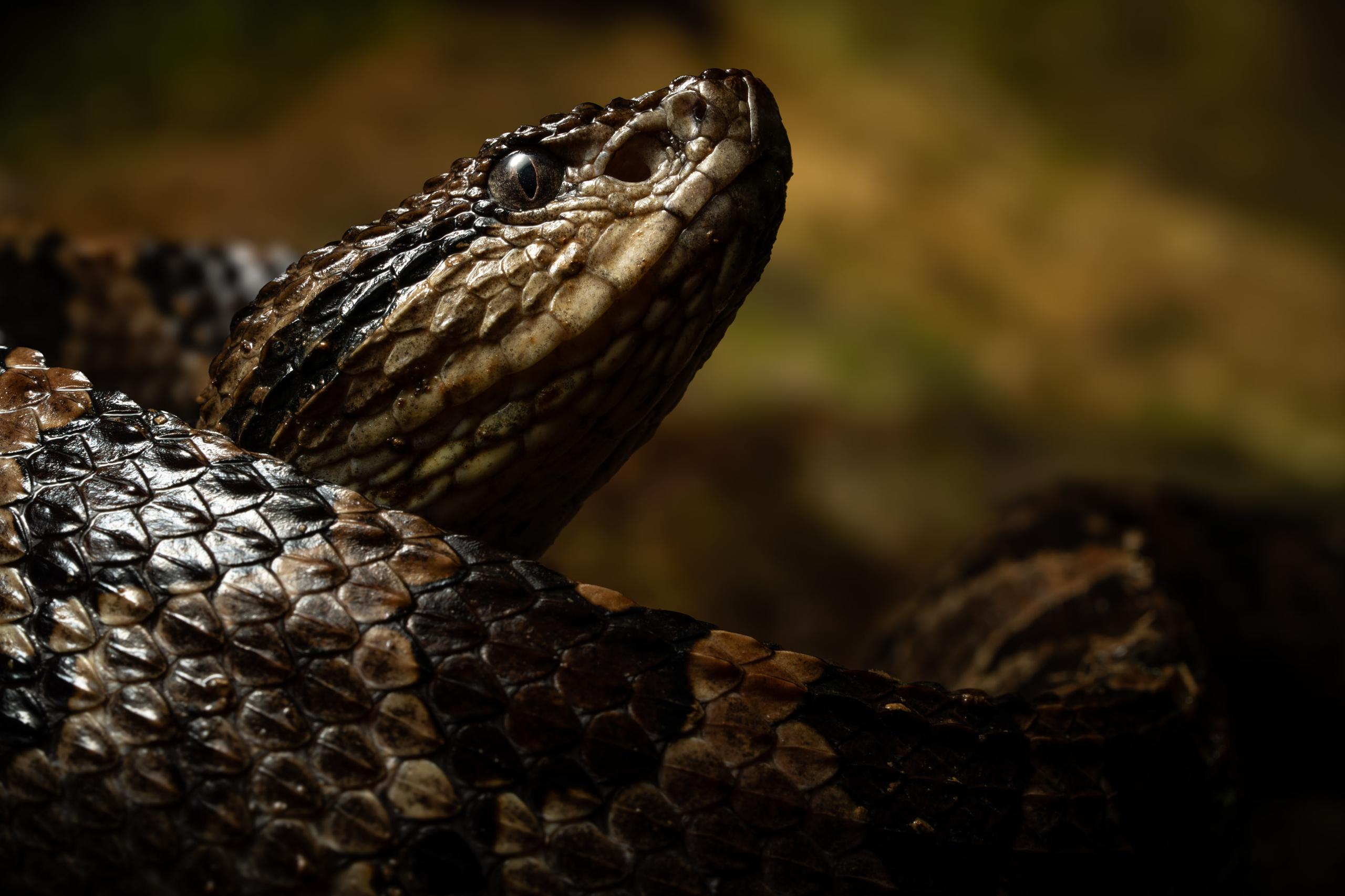
An off-camera flash with a large diffuser. Wet, glossy skin turns a bare flash into hard white reflections. A large diffuser held close to the animal wraps soft light around it. Off camera, held above and to one side, it gives shape instead of flat light.
A headlamp with a red mode. For searching and for walking between subjects. Red light disturbs many animals less. Bring a second, warm, dim light to focus with, and switch it off for the shot.
Add spare batteries for the flash, closed boots and a rain cover. For the full list for every tour, see what to pack for a wildlife photography tour.
Starting settings
At night there is no ambient light to balance, so the flash makes the whole exposure. That makes night macro simpler than it looks: set the camera once, then only change the flash power.
| Setting | Start at | Why |
|---|---|---|
| Mode | Manual | At night the flash makes the exposure, so you want nothing to change between frames. |
| Shutter | 1/200 s | Around your flash sync speed. With no ambient light it only cuts out the glow of headlamps. |
| Aperture | f/8 to f/11 | Enough depth for the eye and most of the head. Stop down further for a whole animal. |
| ISO | 100 to 400 | The flash does the work, so keep ISO low and the files clean. |
| Flash | Manual, low power | Start low and adjust after each frame. Low power also recycles fast. |
| Focus | Manual, on the eye | Set the magnification, then move your body slowly until the eye is sharp. |
Black background or natural background
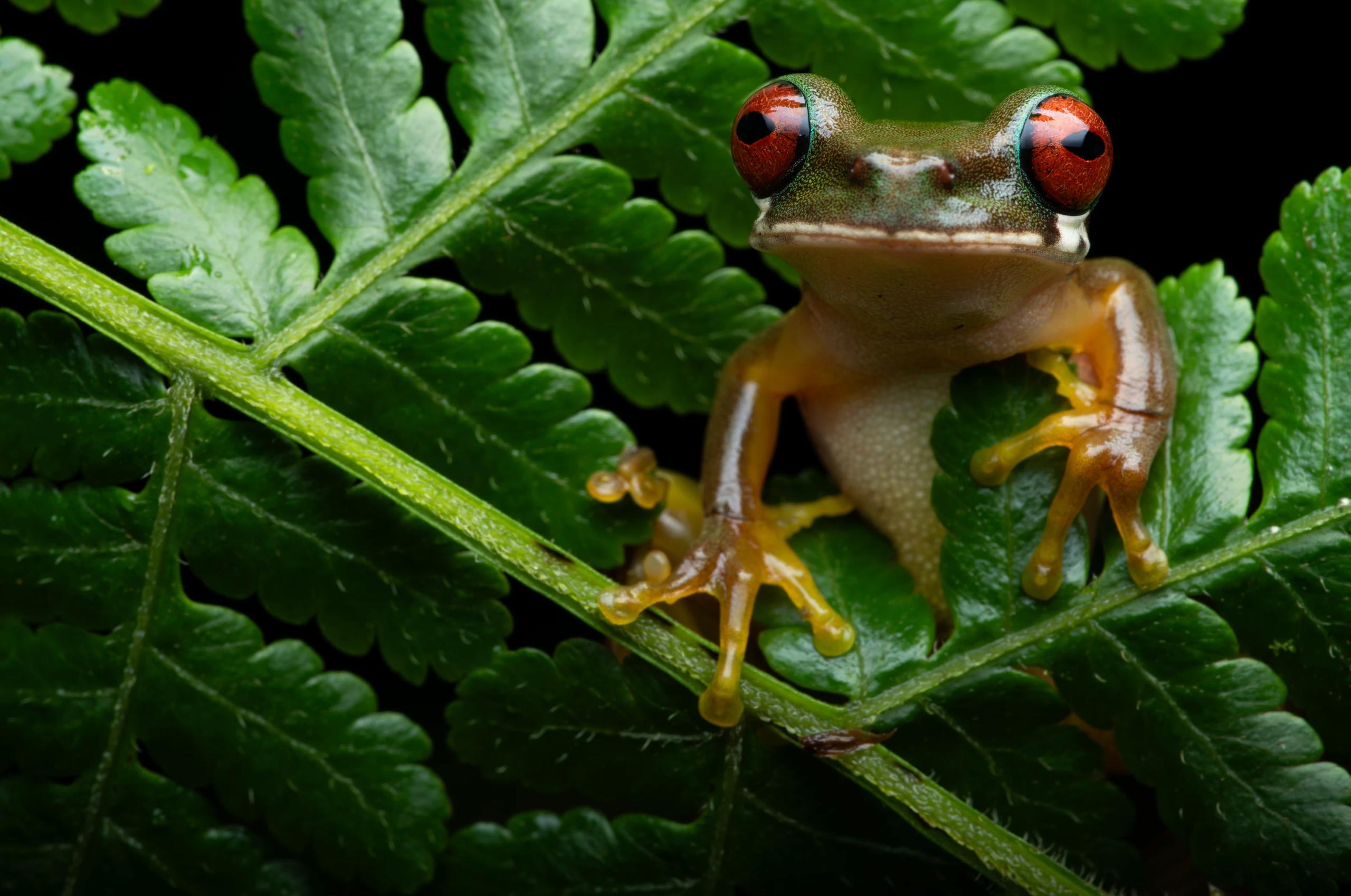
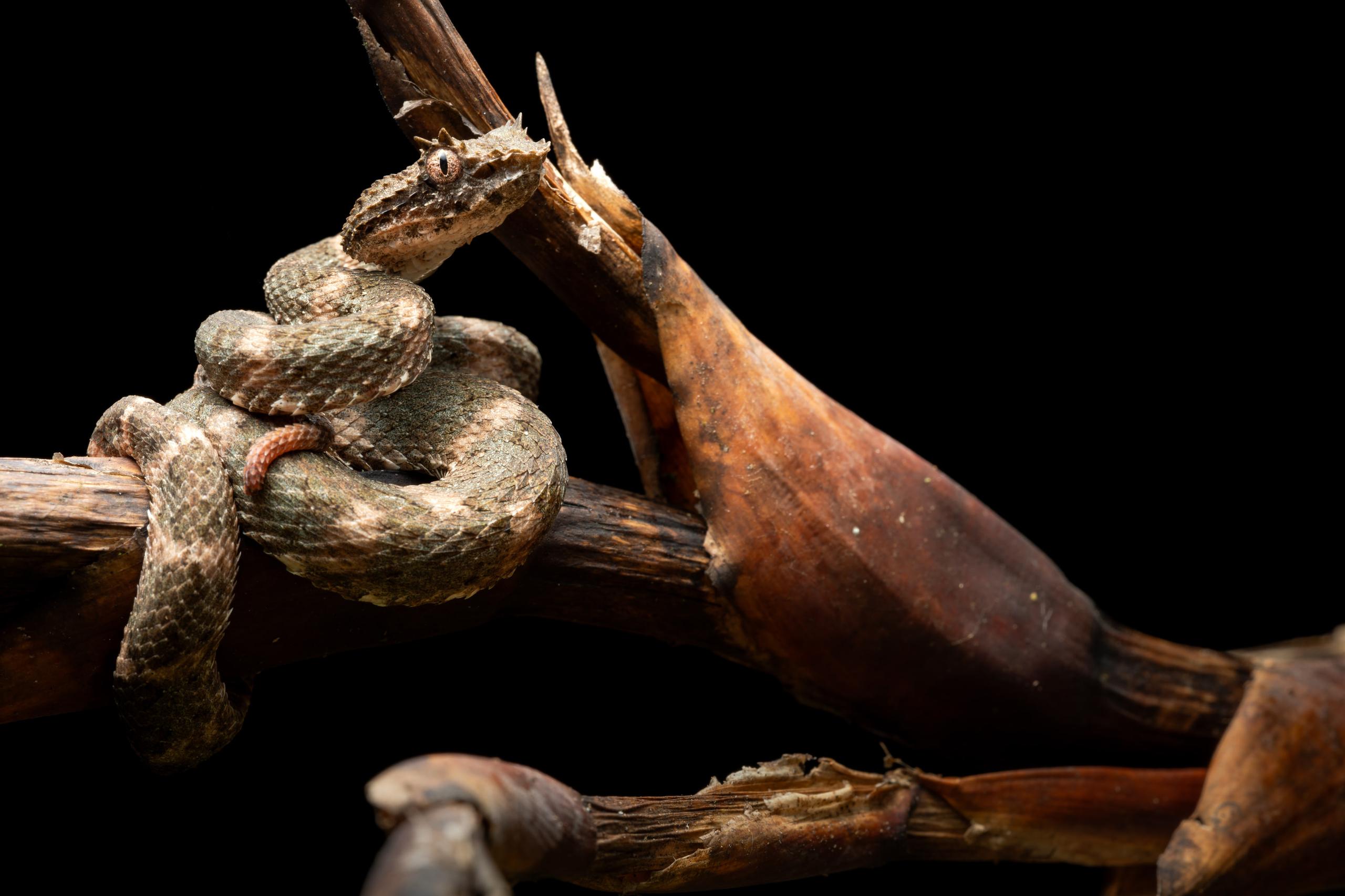
Flash light falls off fast. Whatever sits just behind the animal is lit, and anything farther away goes black. You decide which you want by where you stand. Shoot along a fern or a leaf and the frame fills with green. Shoot past a branch into open forest and the animal floats on black, which isolates the shape. Both work. The mistake is getting one when you wanted the other.
Working safely and gently
Photograph animals where they are. We find frogs and snakes on natural perches and work them there. Moving an animal to a better leaf stresses it and rarely looks natural.
Keep handling to a minimum. Amphibians breathe through their skin, and sunscreen or repellent on your hands can harm them.
Clean your boots between sites. Chytrid fungus is a leading cause of amphibian decline in Costa Rica. Cleaning boots and gear between sites keeps it from spreading.
Respect venomous snakes. Eyelash vipers and fer-de-lance are part of the night. Never touch or move one, let the guide set the distance, and watch where you put your hands and feet.
Keep the group small. Fewer headlamps and footsteps mean calmer animals. That is one reason the tour is six photographers at most.
The same approach works by day for poison frogs. See the strawberry poison frog morphs of Bocas del Toro.
Questions photographers ask
- What lens do I need for night macro photography?
- A 90-105mm macro. It fills the frame with a frog the size of your thumbnail while keeping enough working distance not to disturb it, and to stay a safe distance from venomous snakes.
- What settings should I use to photograph frogs at night?
- Start in manual at 1/200 s, f/8 to f/11 and ISO 100 to 400, with an off-camera flash on low power through a diffuser. Adjust the flash power, not the camera, until the exposure looks right.
- How do I avoid a black background in night macro photos?
- Choose an angle where a leaf, branch or fern sits just behind the animal, so the flash lights it too. A black background is fine when it is a choice, but a natural background shows where the animal lives.
- Is it safe to photograph venomous snakes at night?
- With an experienced guide, a macro lens and patience, yes. Never handle or move a snake, let the guide decide how close you go, watch where you put your hands and feet, and wear closed boots.
- When is the best time for herping in Costa Rica?
- The green season, from about May to November. Regular rain keeps frogs active and calling at night. Our herping tour runs in July for that reason.
The tour
Ten nights of herping with me
11 days from the Caribbean lowlands to the Talamanca highlands and the Sierpe mangroves, six photographers at most. Jul 7 to 17, 2027. From $3,850 per photographer.
See dates and prices