Strawberry Poison Frog Morphs of Bocas del Toro: Island by Island
By Lior Berman · · 2 min read
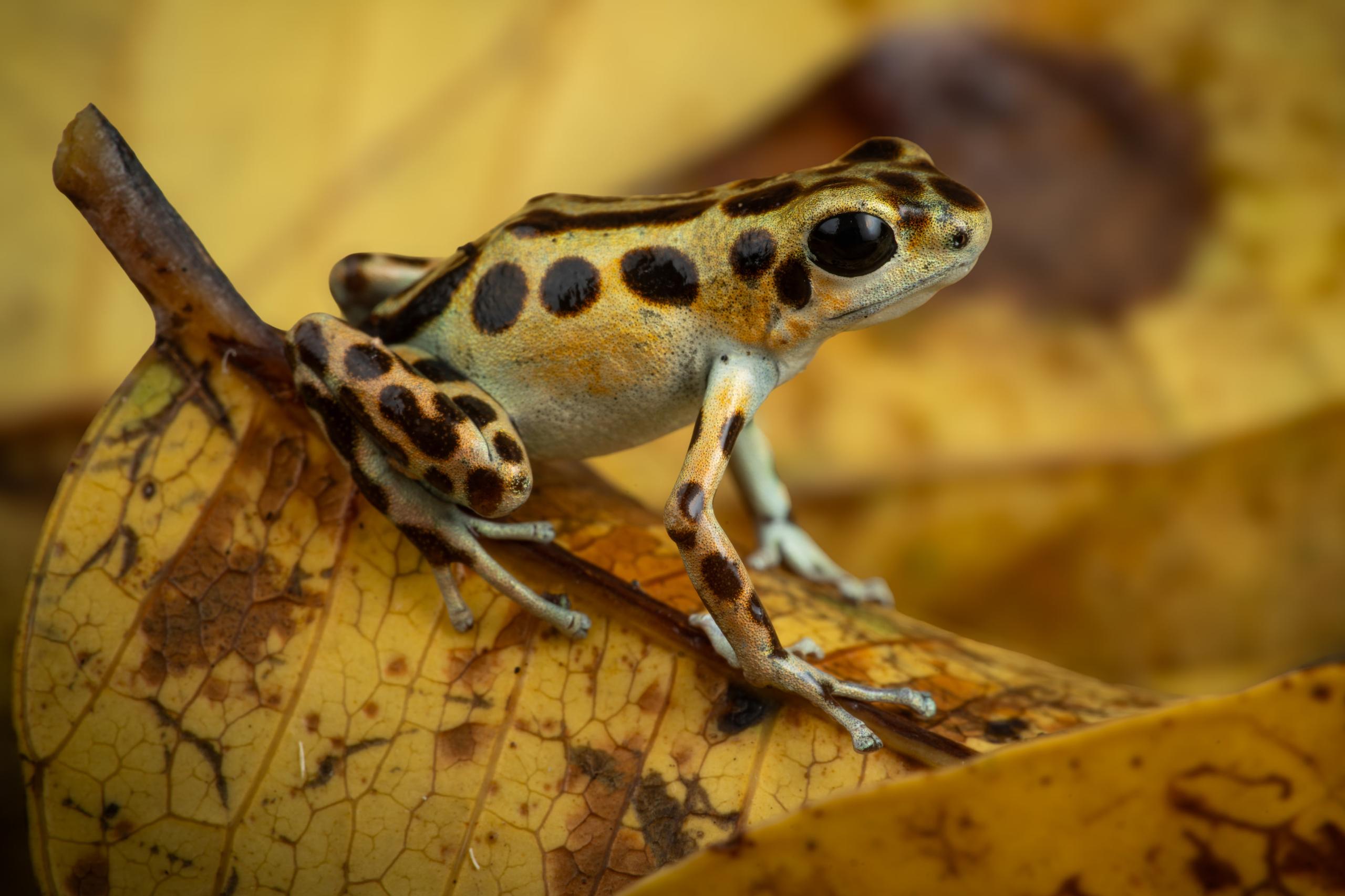
In Bocas del Toro, on Panama's Caribbean coast, one species of frog looks like a different animal from one island to the next. The strawberry poison frog, Oophaga pumilio, is usually red with blue legs across most of its range. In this archipelago it comes in green, yellow, orange, red, blue and bronze, and most islands have their own colour.
That is why I run a frog tour here: two islands a day by boat, one morph each morning and another each afternoon. This guide is what I share with photographers before they come. It covers which colour lives where, why the islands differ, and how to photograph a frog the size of your thumbnail without stressing it.
Why every island has its own colour
The islands of Bocas del Toro were cut off from the mainland by rising seas over the last several thousand years. Each frog population was isolated on its own island and drifted to its own look. Their bright colour is a warning to predators that they are toxic, so each island settled on the colour that works there. Most islands have a single morph. A few, such as Bastimentos and Popa, have more than one.
Researchers have counted more than 15 colour forms across the archipelago. You won't see them all in a week, but on a six-day trip you can photograph several, and the contrast between them is the story of the trip.
Some of the morphs we photograph
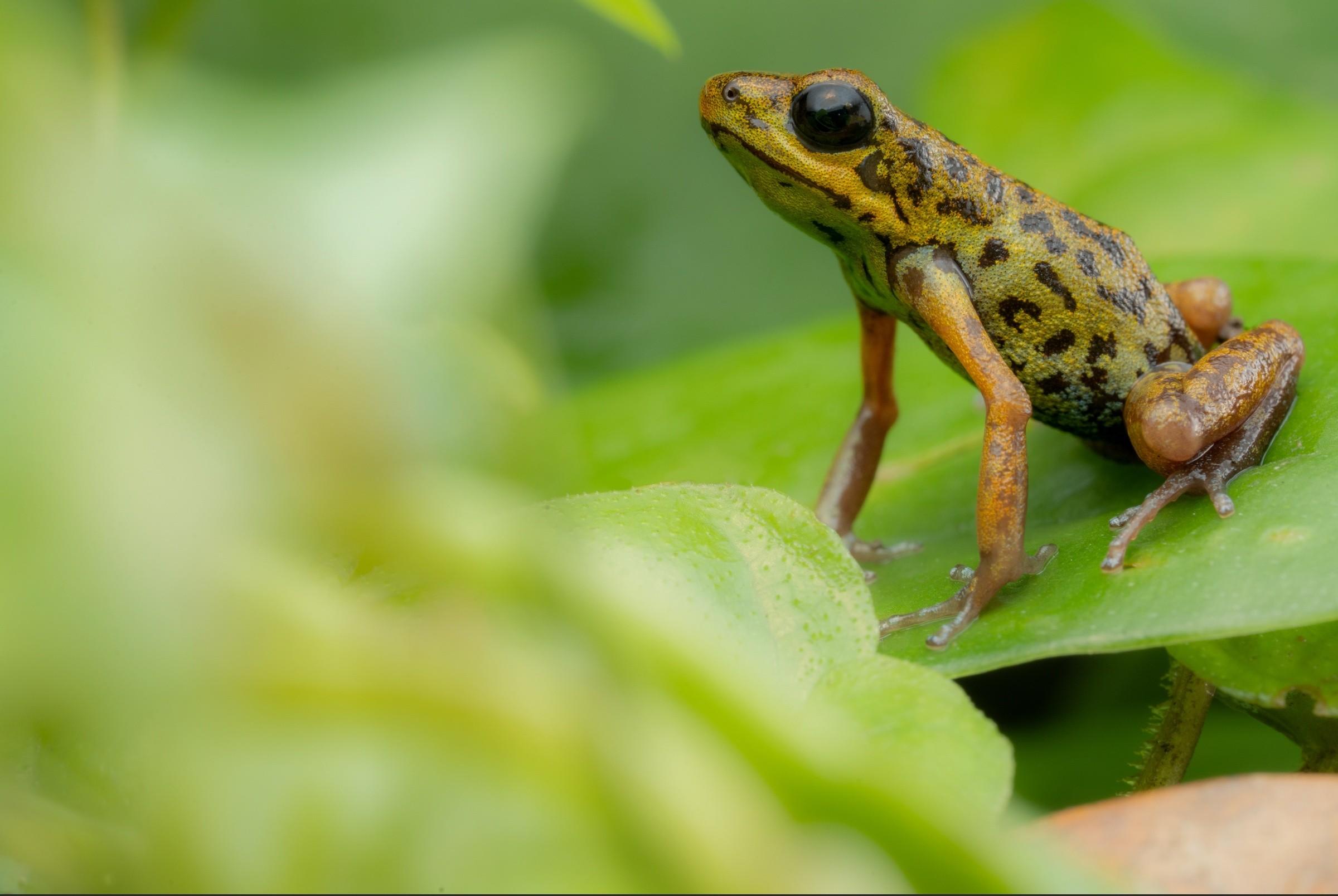
Green-yellow morph, Isla Colón 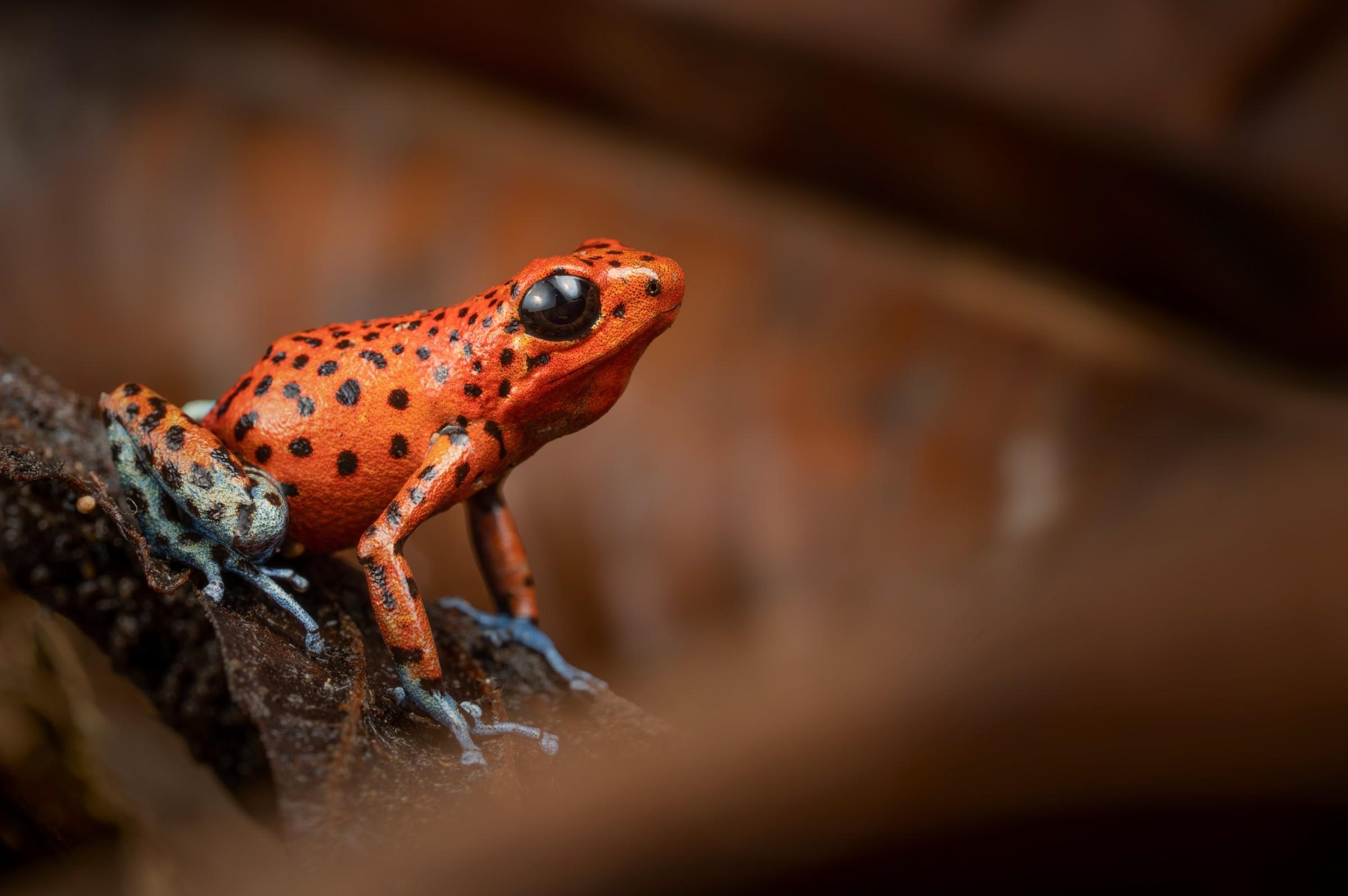
Red morph, Bocas del Toro 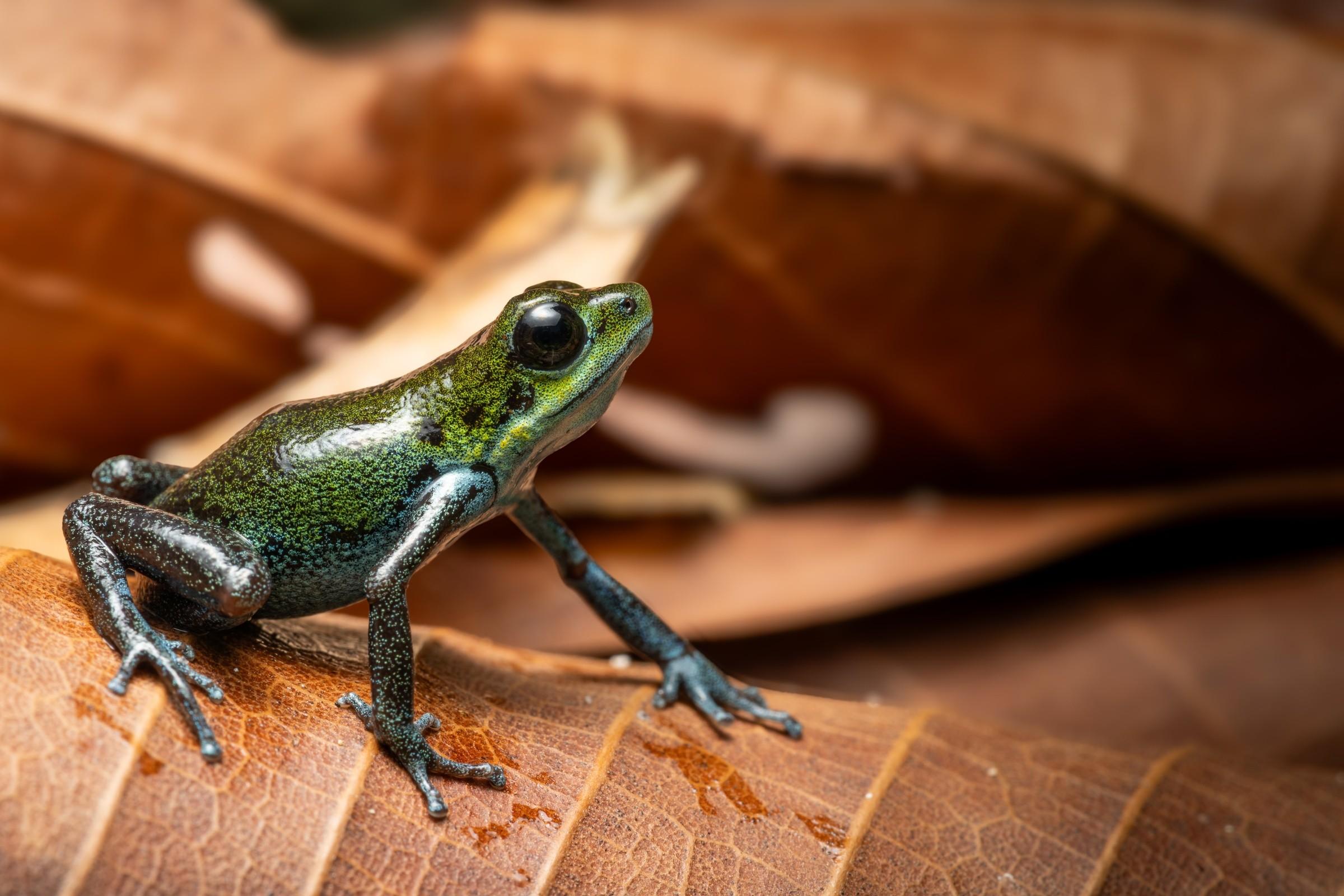
Blue morph, Bocas del Toro 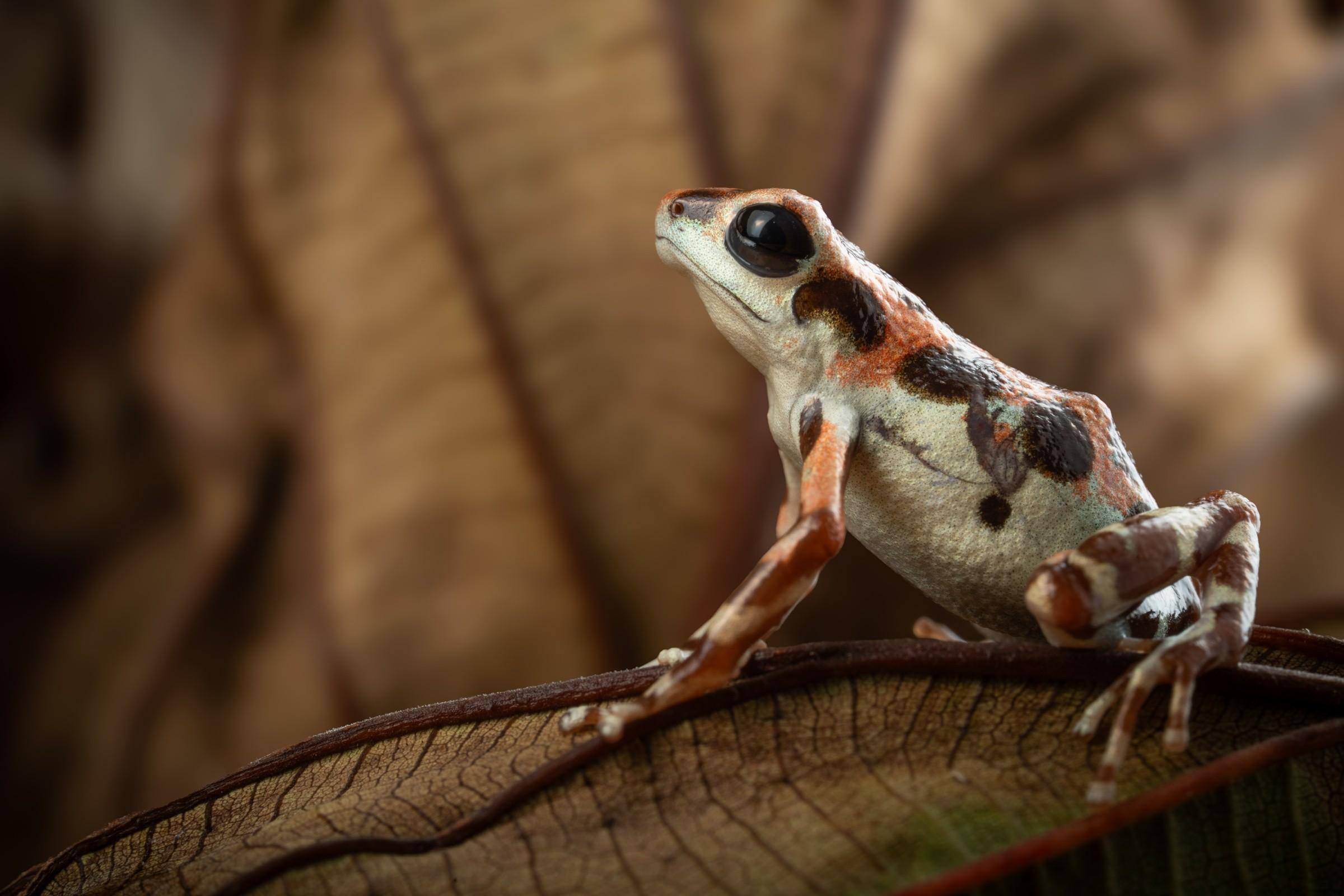
Bronze morph, Bocas del Toro
Island by island
Isla Colón
Green to yellow-green
The island the town of Bocas sits on, and the most studied population in the archipelago. Frogs here are green to yellow-green, often with blue or orange tones on the legs and variable dark spotting. Being next to town, it is the easiest morph to reach.
Isla Bastimentos
Red with black spots, and a rare yellow
The classic red frog of Red Frog Beach: bright red with bold black spots. Bastimentos is also special for science. On the northwest of the island red and yellow frogs live side by side, and that yellow form is the only yellow morph recorded in Bocas del Toro.
Isla Solarte
Orange to orange-red
A small island a short boat ride from Colón, with frogs in vivid orange to orange-red. In one visual study it was the most conspicuous colour to other frogs of its own kind, and it is just as easy for a photographer to spot on the forest floor.
Isla Popa
Two different forms, north and south
One of the larger islands, and one of the few with two distinct morphs: the northern and southern ends of Popa have different-looking frogs.
Which islands we visit each day depends on the sea and the weather that morning. We pick the crossing that is calm and the forest that is active.
How to photograph them
Get low. Shoot at the frog's eye level, flat on the ground. A frog photographed from above looks like a specimen; at eye level it looks like a character.
Use a macro lens and soft light. A 90 to 105 mm macro gives you working distance so you don't crowd the frog. Under the canopy, a diffused flash or a small LED keeps colour true and freezes movement.
Let the frog choose. We never move or handle frogs. We wait for one to climb onto a leaf, root or log with a clean background, and work it from where it chose to sit.
Work the background. Small changes in your position turn a busy forest floor into a soft wash of green. Shift a few centimetres before you change any setting.
Mind the toxin and the habitat. Their skin toxins come from their diet and they are protected. No touching, stay on paths, and keep the group small. That is one reason the tour is six photographers at most.
When to go
Bocas del Toro has two drier windows, January to April and late August to October, which make the daily boat crossings calmer. Frogs are active year-round in the forest, especially after rain.
The tour
Photograph the morphs with me
6 days island hopping from one lodge, two islands a day, six photographers at most. Mar and Nov 2027. From $2,300 per photographer.
See dates and prices