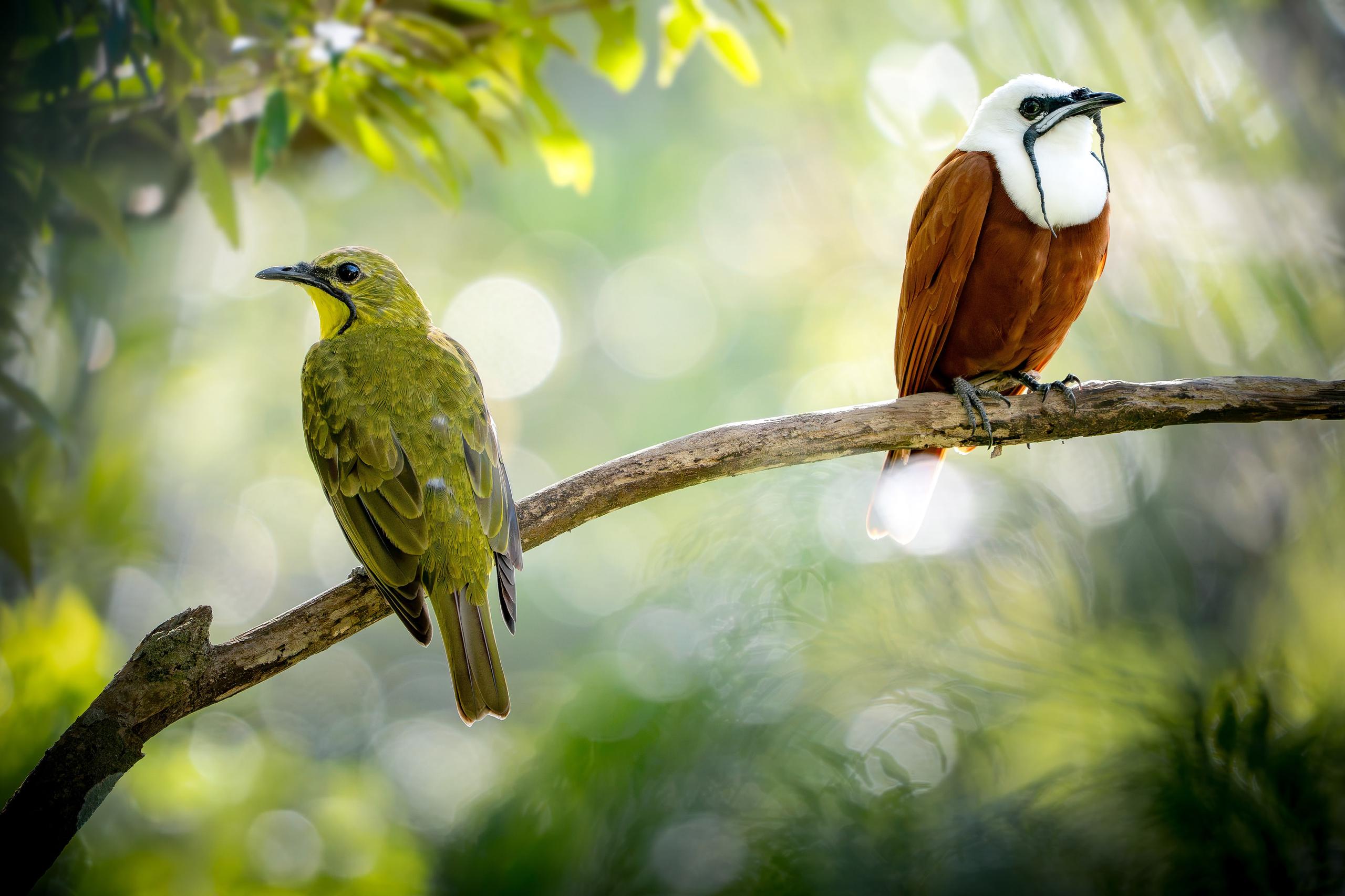
Camera Settings for Bird Photography in Low Light: Rainforest and Cloud Forest
By Lior Berman · · 2 min read
The short answer: shoot in manual with Auto ISO, keep the lens wide open, use the slowest shutter speed the bird allows, in dull light expose a little brighter than the meter suggests and let the ISO rise. Modern cameras handle it.
The rainforest and the cloud forest are dark places to photograph birds. The canopy blocks most of the sky, mornings start grey and misty, and the birds you came for sit in the shade. Many photographers respond by keeping ISO low and coming home with soft, dark files. This guide is the opposite approach, the one I use on every bird tour: prioritise a sharp, well-exposed frame and let the camera deal with the noise.
The settings
| Setting | Start at | Why |
|---|---|---|
| Mode | Manual with Auto ISO | You fix the shutter and aperture the bird needs, and the camera picks the ISO as the light changes between sun and cloud. |
| Aperture | Wide open | f/4 to f/6.3 on most telephoto zooms. Every stop of light matters more than extra depth of field. |
| Shutter, perched bird | 1/250 to 1/500 s | With good stabilization, a still bird is sharp well below the old rules. Go slower only if the bird is truly still. |
| Shutter, moving bird | 1/1000 to 1/2000 s | Feeding, hopping or turning birds need more. Birds in flight need 1/2000 s or faster. |
| ISO | Auto, up to 12,800 | Set a ceiling your camera handles cleanly. A sharp frame at high ISO beats a blurred one at low ISO. |
| Exposure compensation | +0.3 to +1 | Dull, grey light and bright sky behind the bird make the camera underexpose. For white or sunlit birds against dark forest, go the other way, -0.3 to -1. |
| Autofocus | Bird-eye, tracking, continuous | Let the camera find the eye through leaves, and keep it as the bird moves. |
| Drive | Burst | In low light some frames blur. Shoot short bursts and keep the sharpest. |
Stop fearing high ISO
Noise lives in the shadows. A frame shot at ISO 1,600 and brightened two stops in editing is noisier than the same frame shot at ISO 6,400 and exposed correctly. So expose well in the camera, even if the ISO number looks high. Recent full-frame bodies give clean files at ISO 6,400 to 12,800, and modern AI noise reduction in editing cleans up far more than that.
Blur is the problem you can't fix later. Choose the shutter speed first, for the bird in front of you, and let ISO follow.
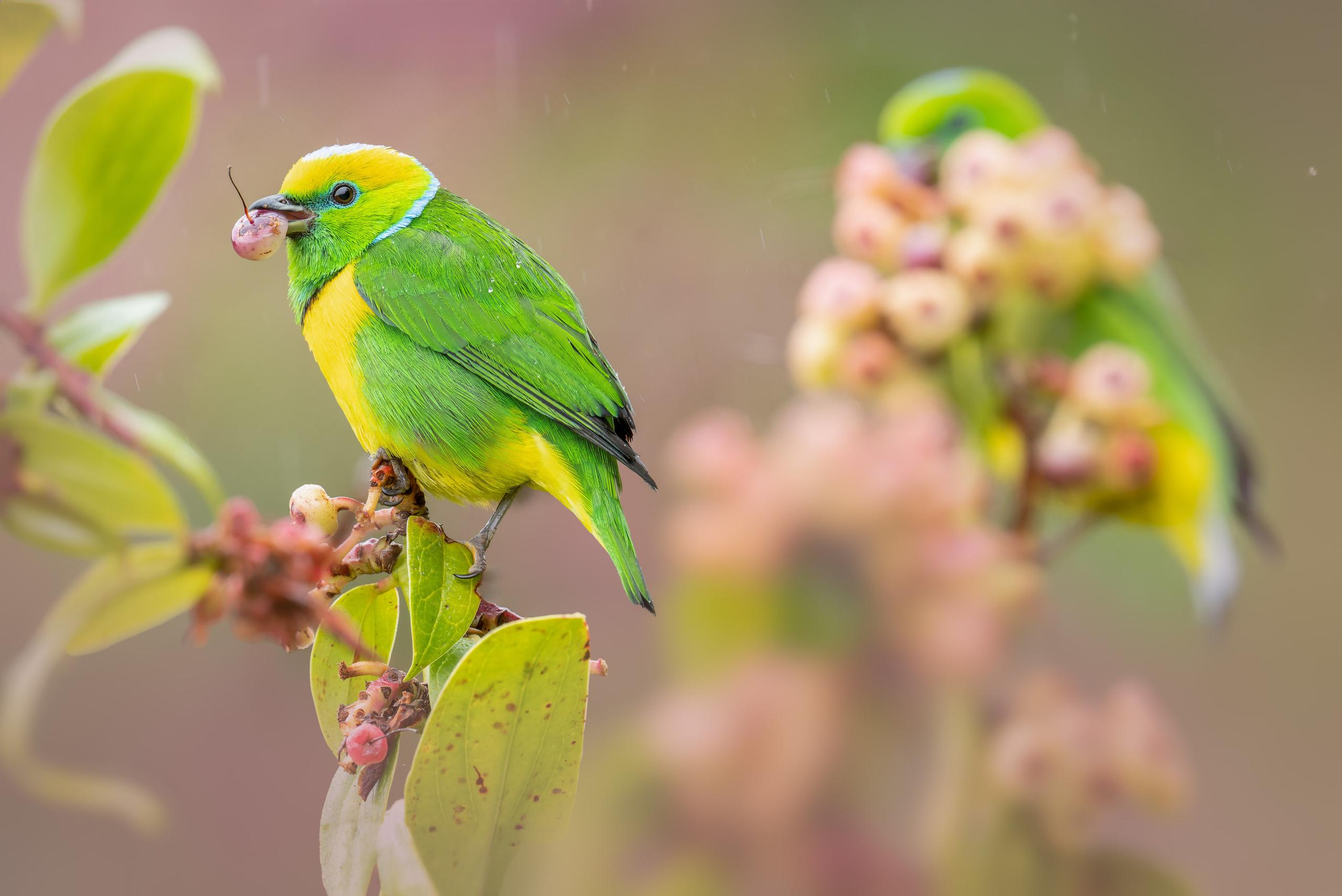
Natural light, no flash
Flash used to be the answer to dark forest. It isn't anymore. Fast sensors, clean high ISO and modern noise reduction let you photograph birds in the light they live in. Natural light keeps the real colours of the plumage, the soft glow of a misty morning and the green of the forest behind the bird, and it doesn't disturb the bird. The same applies to hummingbirds: see the Ecuador hummingbird guide for how to freeze their wings without flash.
Technique that buys you light
Brace the lens. Rest it on the hide window, a beanbag or a tripod with a gimbal head. A steady lens lets you use a slower shutter for a perched bird.
Shoot in short bursts. In low light, some frames in every burst will be soft. Three to five frames give you a sharp one.
Wait for the bird to pause. Birds stop for a moment between movements. That pause is when a slow shutter works.
Find the light in the forest. A gap in the canopy, the forest edge, a fruiting tree in the open. A few metres can make two stops of difference.
Watch for white birds. A King Vulture or an egret against dark forest burns out fast. Use negative exposure compensation and check the highlights.
For how I process a high-ISO file afterwards, see how I edit a wildlife photo in Lightroom. For where to find the birds, see the Costa Rica bird photography guide.
Questions photographers ask
- What are the best camera settings for birds in low light?
- Manual mode with Auto ISO, the lens wide open, 1/250 to 1/500 s for a perched bird with good stabilization or 1/1000 s and faster for moving birds, and plus 0.3 to plus 1 exposure compensation in dull light.
- What ISO is too high for bird photography?
- It depends on the camera, but recent full-frame bodies give clean files at ISO 6,400 to 12,800, and modern noise reduction cleans up much more. A sharp, well-exposed frame at high ISO is always better than a blurred or underexposed one at low ISO.
- Should I use flash for birds in the rainforest?
- Not anymore. Fast sensors, clean high ISO and modern noise reduction let you photograph birds in natural light, which keeps the real colours and the feel of the forest.
- Why are my bird photos noisy?
- Usually because they are underexposed. Noise shows most in the shadows, so a dark file brightened later looks worse than a brighter file shot at a higher ISO. Expose well in the camera, then use noise reduction in editing.
- What shutter speed do I need for a bird in flight?
- 1/2000 s or faster to freeze the body and most of the wings. For small, fast birds, go faster still, and use bird-eye tracking autofocus in burst mode.
The tour
Put these settings to work in Costa Rica
11 days from lowland hides to the quetzal highlands and Monteverde, six photographers at most. Apr 19 to 29, 2027. From $4,250 per photographer.
See dates and prices