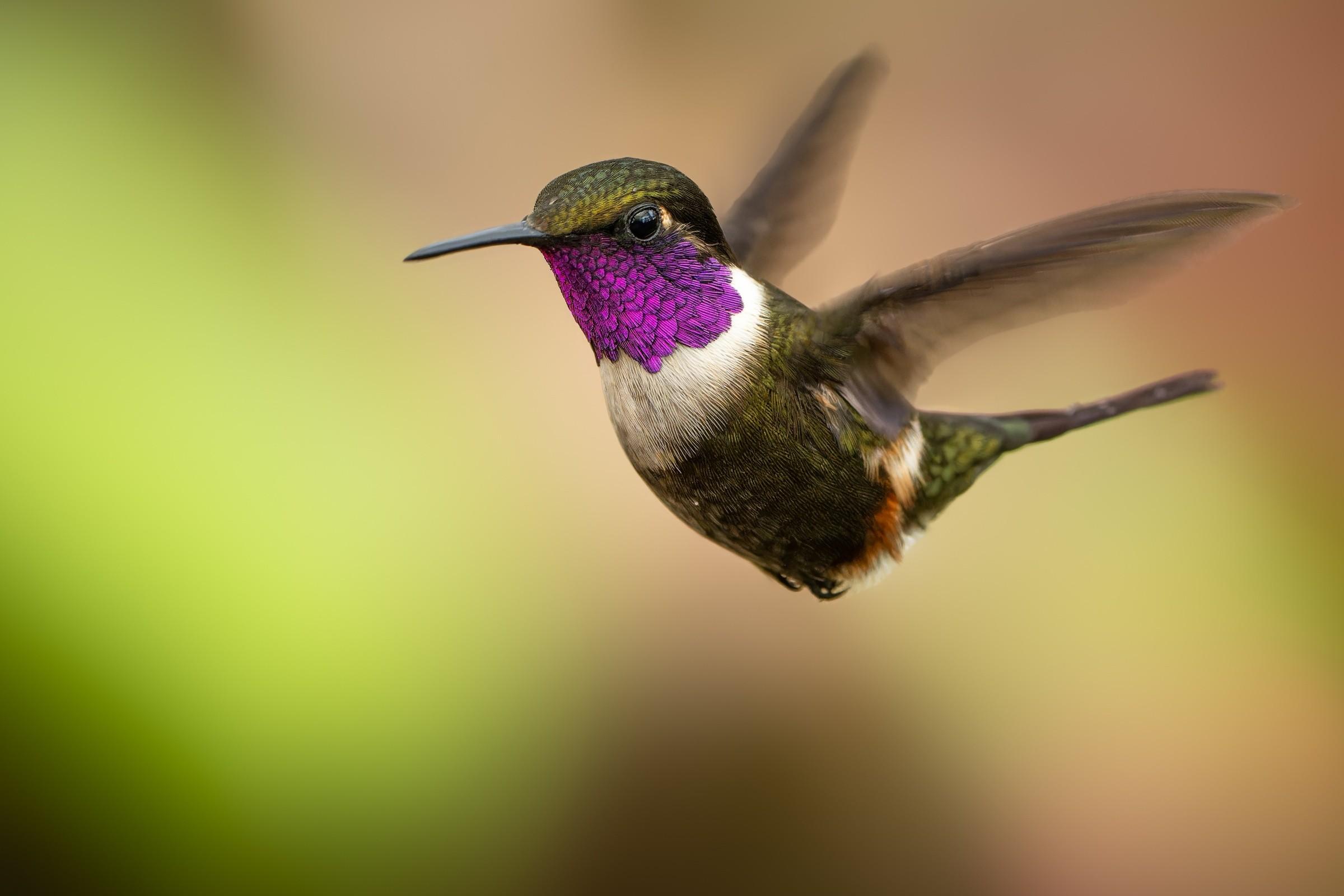
Hummingbird Photography in Ecuador: Where to Go and How to Shoot Them
By Lior Berman · · 3 min read
The short answer: photograph hummingbirds in Ecuador by elevation, not by place. The western cloud forest, the Chocó, the high páramo and the eastern slope each have their own species, and a week that crosses the Andes puts dozens of them in front of your camera.
Ecuador has about 132 hummingbird species, second only to Colombia, in a country you can cross in a day. That is why I run a bird tour there. This guide covers where each group of hummingbirds lives, how to photograph them at feeders and on natural perches, and how a modern camera freezes their wings in natural light, with no flash.
Four zones, four sets of hummingbirds
Western cloud forest
Around Nono, northwest of Quito
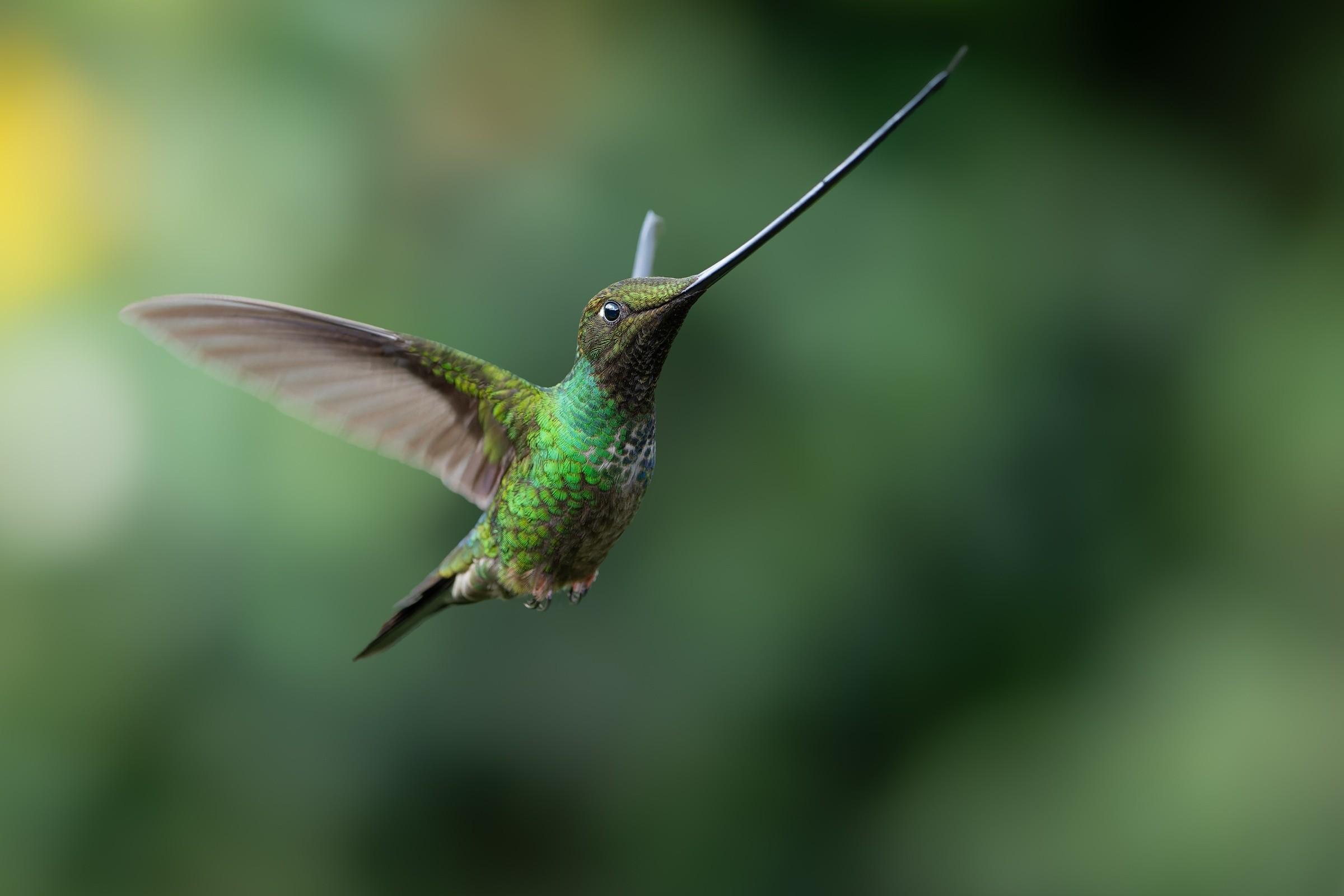
Cool, misty forest where the hides and feeders bring a long list of hummingbirds to eye level. This is the place for the Sword-billed Hummingbird, the only bird whose bill is longer than its body.
Hummingbirds to look for: Sword-billed Hummingbird, Sapphire-vented Puffleg, Mountain Velvetbreast, Collared Inca, Buff-tailed Coronet, Black-tailed Trainbearer.
The Chocó
The lower western slope, toward the Pacific
Warmer, wetter forest with some of the most colourful hummingbirds in the country, and the Andean cock-of-the-rock leks in the same valleys. The western slope around Mindo is famous for the same reason.
Hummingbirds to look for: Velvet-purple Coronet, Violet-tailed Sylph, Empress Brilliant.
High Andes and páramo
Antisana and Papallacta Pass
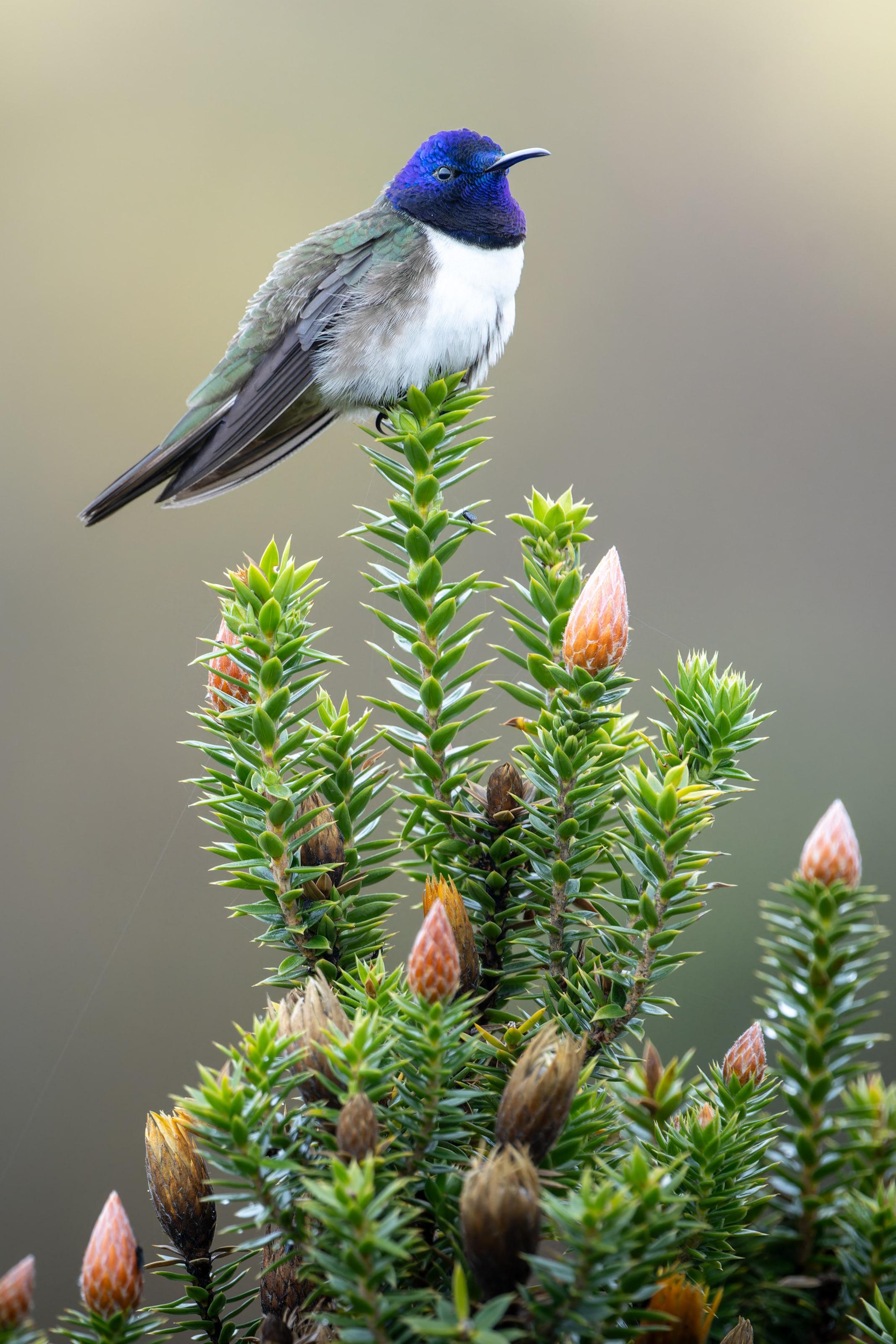
Open grassland above the treeline, cold and bright. The Giant Hummingbird, the largest hummingbird in the world, lives here, and the Ecuadorian Hillstar feeds on the orange chuquiraga flowers of the páramo. Bring warm layers.
Hummingbirds to look for: Giant Hummingbird, Ecuadorian Hillstar, Shining Sunbeam, Rainbow-bearded Thornbill, Great Sapphirewing.
Eastern slope
The Amazon side of the Andes
A different set of species from the western side, at feeders and in reserves, with some of the longest tails of any hummingbirds.
Hummingbirds to look for: Chestnut-breasted Coronet, Tourmaline Sunangel, Long-tailed Sylph, Booted Racket-tail, Gorgeted Woodstar, Violet-fronted Brilliant.
Feeders, flowers and natural perches
Feeders bring hummingbirds close, but a bird on a plastic feeder is not the photograph. The trick is the perch next to it. Between visits, hummingbirds rest on the same few twigs and flowers near the feeder. Find that perch, set up with a clean background behind it and wait. You get the bird at rest, on a natural branch, with the feeder out of frame.
In the páramo there are no feeders. There you work the flowers the birds feed on, such as the chuquiraga, and let the hummingbird come to you.
Freezing the wings, without flash
For years the only way to freeze a hummingbird's wings was a set of flashes. That has changed. Recent mirrorless bodies have electronic shutters of 1/8000 s and faster, up to 1/32000 s on some models, and their fast sensors read out quickly enough that the wings don't bend or smear. Files stay clean at high ISO, and modern noise reduction cleans up the rest. Together, that freezes every feather in natural light.
Natural light also looks better. The bird keeps the colours and the background of the place where it lives, the iridescent throat catches the real light, and you are free to follow it from perch to flower instead of waiting in front of a fixed setup. In bright light, start around 1/8000 s. In the darker cloud forest, slow down to what the light allows and accept a touch of wing blur, which shows movement and often makes the better photo.
Settings and technique
Natural light, perched birds. Use a shutter speed of at least 1/1000 s for a bird at rest, because hummingbirds never stay still for long. Open the aperture and let the ISO rise in the cloud forest.
Choose blur or freeze. A little wing blur shows movement and can look better than a frozen bird. Freezing the wings needs a very fast electronic shutter and good light.
Mind the minimum focus distance. Feeder birds come very close. A 70-200mm or 100-400mm zoom focuses closer than a long prime and frames a tiny bird well.
Watch the background. Move a few steps until the background behind the perch is distant forest, not a building or a feeder. It turns into a soft wash of green.
Work the morning. Birds are most active early, and on many days the cloud forest light is best before the mist thickens.
For the lens list for every tour, see what to pack for a wildlife photography tour.
Questions photographers ask
- Where is the best place to photograph hummingbirds in Ecuador?
- There is no single place, because each elevation has its own species. The western cloud forest around Nono and Mindo, the Chocó, the high páramo at Antisana and Papallacta, and the eastern slope each add birds you won't see in the others.
- How many hummingbird species are there in Ecuador?
- About 132, second only to Colombia. A well-planned week across both slopes of the Andes can put dozens of them in front of your camera.
- Do I need flash to freeze hummingbird wings?
- Not anymore. Recent mirrorless bodies have electronic shutters of 1/8000 s and faster, up to 1/32000 s on some models, with fast sensors that don't distort the wings. Combined with clean high ISO and modern noise reduction, that freezes a hummingbird in natural light.
- What lens do I need for hummingbird photography?
- A 70-200mm or 100-400mm zoom works best at feeders and flowers, because the birds come close. A longer lens helps for birds on distant perches and for the páramo species.
- When is the best time to photograph hummingbirds in Ecuador?
- Hummingbirds are resident and can be photographed all year. What changes is the weather: June to August are the driest months on the western slope, and March and April are usually the wettest. Mornings are best in every season.
The tour
Cross the Andes for hummingbirds with me
11 days from the Nono cloud forest across the Andes to the eastern slope, six photographers at most. May 18 to 28, 2027. From $3,850 per photographer.
See dates and prices