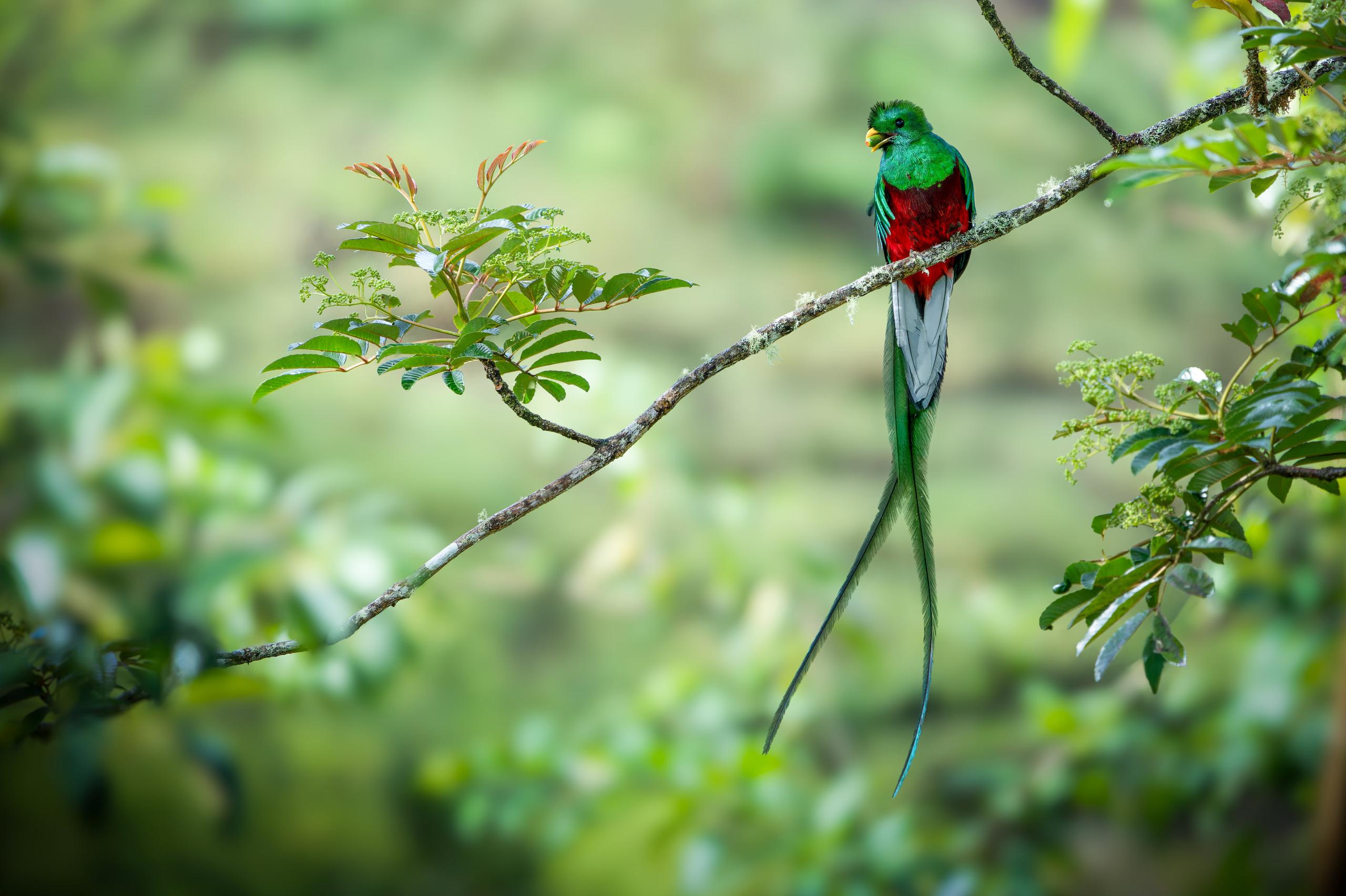
Where and When to Photograph the Resplendent Quetzal in Costa Rica
By Lior Berman · · 2 min read
The short answer: the Talamanca highlands, from March to May, at first light. That is where and when the resplendent quetzal is easiest to photograph in Costa Rica.
The quetzal is the bird most photographers come to Costa Rica for. It lives in the highland cloud forest, it is shy, and most people who see one only see it high in the canopy, half hidden by leaves. This guide is what I tell photographers before a trip: where to go, which months work, and how to get a clean frame of a bird that gives you a few seconds at a time.
Find the avocado tree, find the quetzal
Quetzals feed mostly on wild avocados and other small fruit of the laurel family. They swallow the fruit whole and bring the seed back up later. When a tree is fruiting, the same birds come back to it morning after morning. That is the whole secret of quetzal photography: you don't chase the bird through the forest, you wait at the right tree at the right hour.
The best trees for photography grow on the forest edge, where the bird lands on an open branch with sky or soft green behind it, instead of deep inside the canopy. Local guides in the highlands know which trees are fruiting each week, and that knowledge is worth more than any lens.
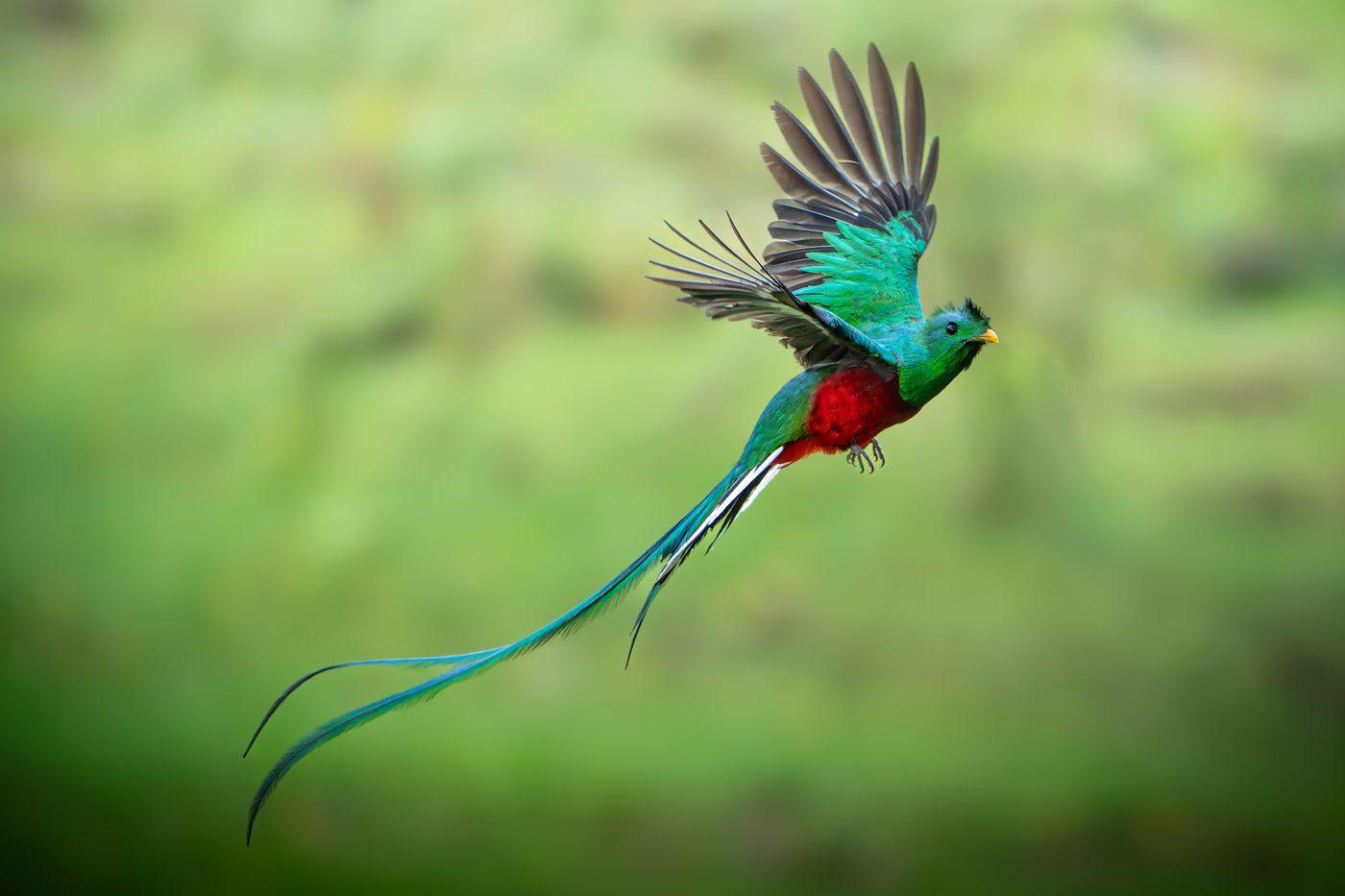
Where to photograph quetzals in Costa Rica
Cerro de la Muerte and the Talamanca highlands
Where we go
The high Talamanca mountains south of San José, around the Inter-American Highway and the valleys below it such as San Gerardo de Dota. Wild avocado trees grow along the forest edge here, which lets you photograph quetzals feeding in the open in the early morning. Both of my Costa Rica tours spend two mornings here.
Monteverde
The famous one
The best-known cloud forest in Costa Rica, and a good place to see quetzals. For photography it is harder: the forest is dense and dark, the birds often sit high in the canopy, and the trails are busy. We go to Monteverde for the three-wattled bellbird and the cloud forest birds instead.
Los Quetzales National Park
Protected forest
A national park in the same Talamanca highlands, named for the bird. High oak forest and páramo, cold mornings and real chances of a quetzal along the forest trails.
When to go
March to May
Breeding season, the best time
Breeding usually starts in March. Males carry their full tail streamers, pairs stay close to their nest areas and feed at the same fruiting trees day after day. This is when quetzals are most predictable, and why my bird tour runs in April.
June to August
Breeding continues
Still a good time. Pairs are raising young and the birds are around, but the rains are heavier and the tail streamers of some males are already worn.
September to February
Outside the breeding season
Quetzals live in Costa Rica all year, but outside the breeding season they follow the fruit and some move to lower slopes, so they are harder to find. With a local guide who knows which trees are fruiting, you can still photograph them. My Osa to cloud forest tour, in late November and early December, has two quetzal mornings for that reason.
How to photograph them
Be there at first light. Quetzals come to the fruiting trees early. By mid-morning the clouds often roll in and the light goes flat.
Bring reach, not footsteps. A 200-600mm or a 100-400mm frames a bird thirty meters up without walking closer. Every step toward the tree is a chance to flush it.
Expect low light. Cloud forest mornings are grey and misty. Be ready to push ISO, and use a body whose files stay clean at high ISO.
Pre-set for the flight. A quetzal leaves a branch without warning. Keep a fast shutter speed, 1/2000 s or faster, and tracking autofocus on, so the take-off is a frame and not a blur.
Respect the nest. Quetzals nest in holes in dead trunks. Keep your distance from a nest, never use playback calls, and let the guide decide how close the group goes. That is one reason the tour is six photographers at most.
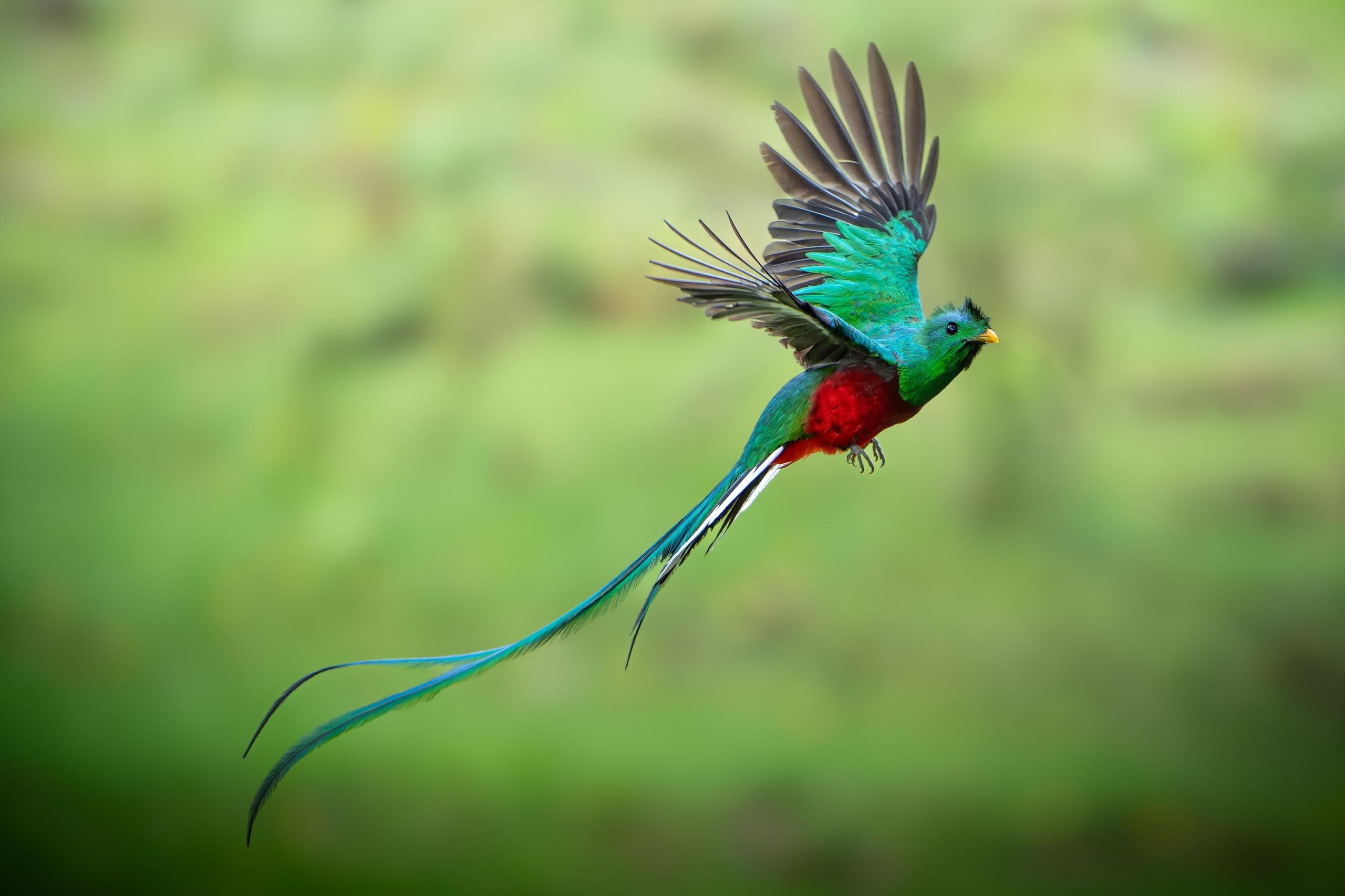
For the rest of Costa Rica's birds, from the King Vulture to the scarlet macaw, see my Costa Rica bird photography guide.
Questions photographers ask
- Where is the best place to photograph the resplendent quetzal in Costa Rica?
- The Talamanca highlands around Cerro de la Muerte and San Gerardo de Dota. Quetzals there feed at wild avocado trees on the forest edge, so you can photograph them in the open at dawn. Monteverde has quetzals too, but the forest is darker and the birds often sit higher.
- What is the best month to see quetzals in Costa Rica?
- March to May, during the breeding season, when males have their full tail streamers and pairs stay close to their nest areas. Quetzals are present all year, but outside the breeding season they are harder to find.
- What time of day is best for quetzal photography?
- From first light to mid-morning. Quetzals come to fruiting wild avocado trees early, and the light on the forest edge is soft before the clouds build.
- What do quetzals eat?
- Mostly wild avocados and other small fruit of the laurel family. They swallow the fruit whole and regurgitate the seed, which is why a fruiting tree is the best place to wait for one.
- What lens do I need to photograph a quetzal?
- A long telephoto. A 200-600mm or a 100-400mm covers a bird thirty meters up a fruiting tree without walking closer and flushing it. Cloud forest light is low, so a body that handles high ISO well helps.
The tour
Two quetzal mornings in breeding season
11 days from the King Vulture hide to the quetzal highlands and Monteverde, six photographers at most. Apr 19 to 29, 2027. From $4,250 per photographer.