|
PHOTO∗LIOR
| |
WILDLIFE PHOTOGRAPHY TOURS & WORKSHOPS
|
|
|
∗
| |
ISSUE TWO
| |
Issue two of the field journal is about birds. Costa Rica packs an outsized share of the world's species into a small footprint, and this is the piece I've wanted to put together for a while.
| |
This one covers the ecosystems that make it possible, the species worth planning a trip around, and what's coming up on the calendar for next year. Grab a coffee, there's a lot of birds in this one.
|
|
|
BIRDING IN COSTA RICA
| |
Where a small country holds an outsized share of the world's birds
| |
The ecosystems that make it possible, the species worth planning around, and what's going in the bag to get them.
|
|
|
 |
|
THE PLACE
| |
Why a country this small holds this many birds
| |
Costa Rica sits on a strip of land barely wider than West Virginia, and that's exactly why it works. It's the bridge between two continents, close enough to both North and South America that species from each side overlap here and nowhere else, and a volcanic spine runs the length of the country, pushing habitat from sea level to over 3,000 meters in the space of a few hours' drive. Compress that much elevation and that much overlap into one country and you get one of the highest concentrations of bird species on the planet, more than 900 of them, packed into an area smaller than West Virginia.
| |
That compression is why the cast of species changes so quickly across short distances. Drive a few hours inland from the Caribbean lowlands and hot rainforest gives way to cool cloud forest on the continental divide; keep going toward the Pacific and the cloud forest drops back down into the seasonally dry northwest, a stretch of coastline with its own dry-season calendar and its own colonial cattle-ranching history. What follows moves through that gradient region by region, from the Caribbean lowlands to the highlands to Guanacaste, tracing how each landscape's climate, elevation and human history shape the birds found in it.
|
|
 |
|
| THE BIRDS | | Seventeen birds, five ecosystems, one country |
|
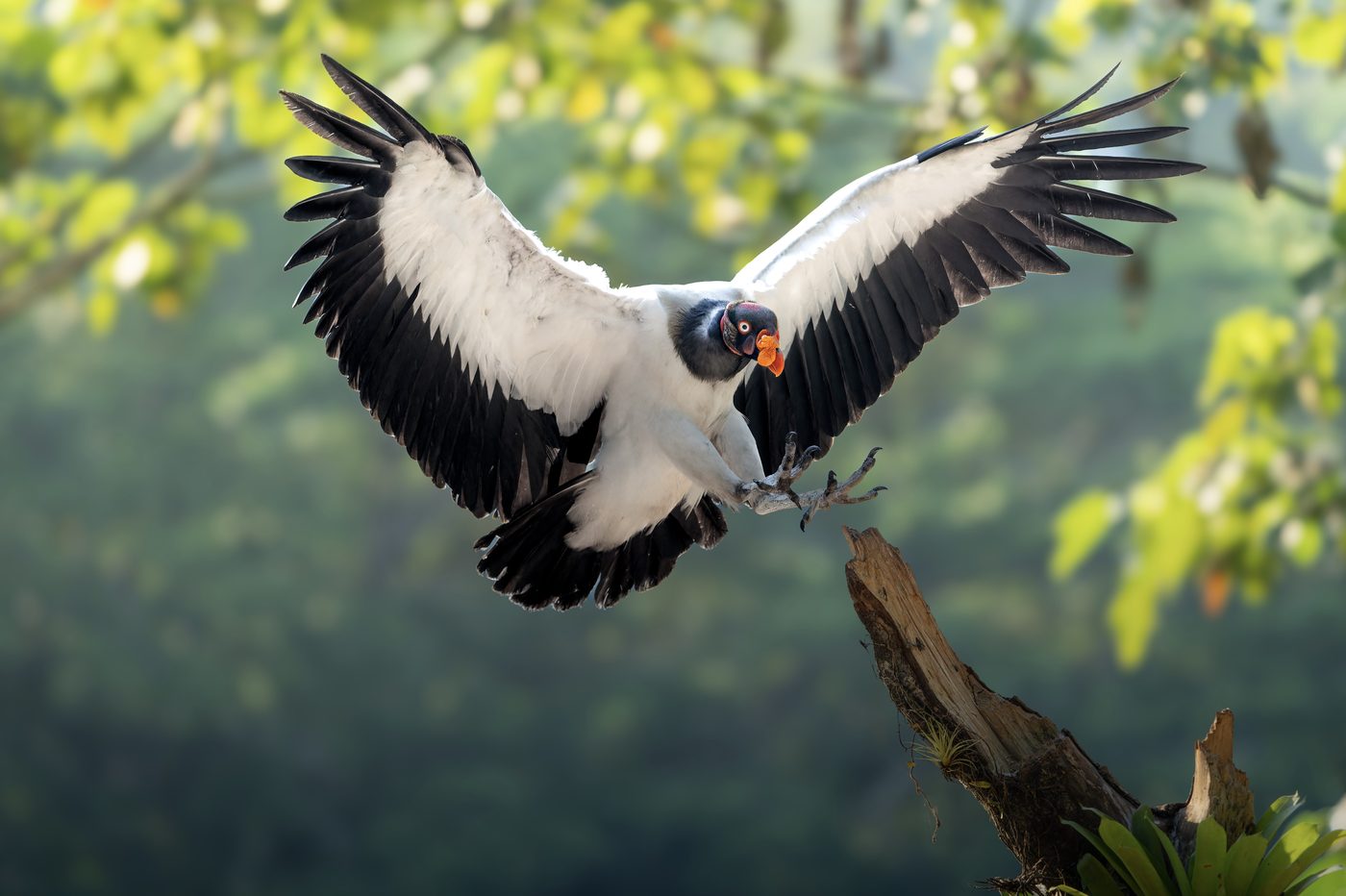
| LOWLAND RAINFOREST | | This lowland belt runs along Costa Rica's Caribbean slope, around Boca Tapada and the Sarapiquí lowlands, forest that stayed largely unbroken until banana and pineapple plantations expanded through the twentieth century and cut it into the reserves and private forest patches where most of today's photography happens. Hot, humid, and loud from first light, it is also where feeder platforms built for photography turn what would be a lucky fly-by anywhere else into a controlled, repeatable frame, and the forest floor and canopy each hold their own specialists. | 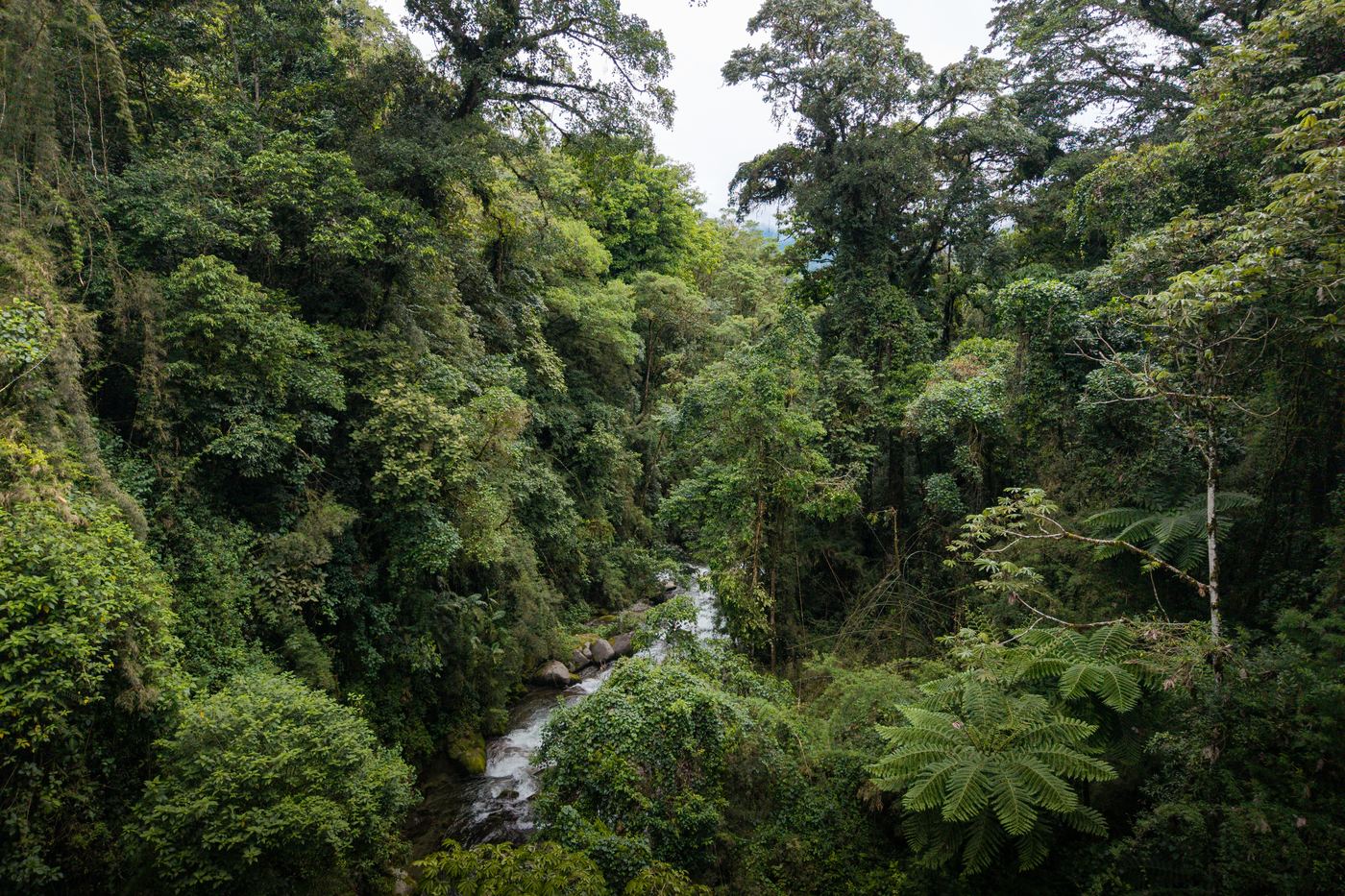 | | Above one of these platforms, the bird most likely to claim it first is also the largest vulture in the region. The King Vulture is the largest vulture in Central America and, despite its name, not a predator at all: it is a scavenger whose bare, multicolored head, orange, yellow and violet, evolved without feathers precisely because it spends its life plunging into carcasses, where feathers would trap bacteria and rot. At a kill it typically outranks the smaller Black and Turkey Vultures that arrive first, using its size and a strong hooked bill to tear open hides too tough for them to breach, a habit that earned it both its English name and its Spanish one, zopilote rey. Maya and Aztec artisans carved its image onto ceramics and codices, one of relatively few New World birds to recur so often in pre-Columbian iconography. |
|
 |
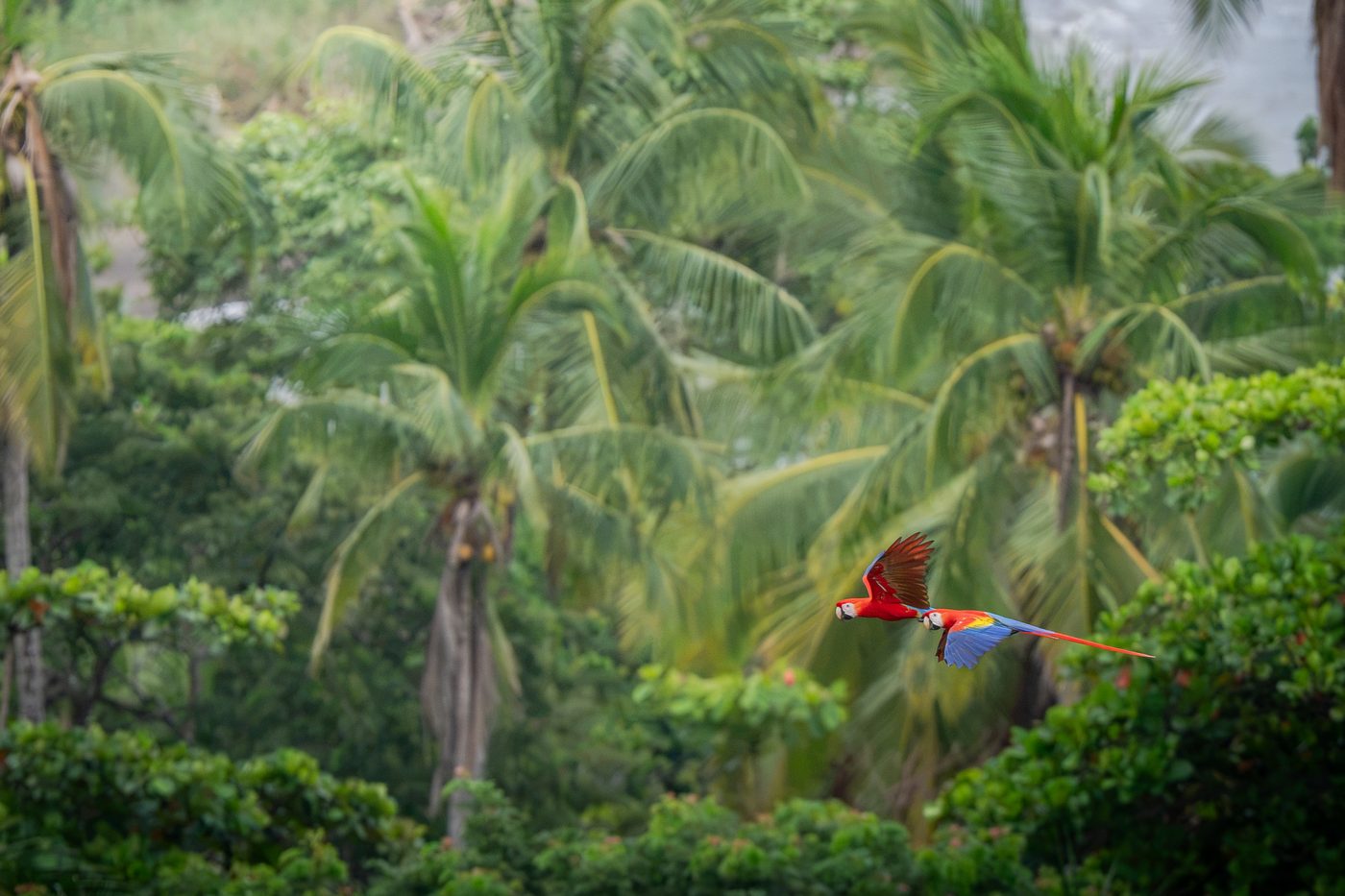
| The same lowland forest carries a louder, more colorful signal overhead. Scarlet Macaws mate for life and travel in pairs or small family groups, their crimson, blue and yellow plumage and long tails visible from a considerable distance as they cross the canopy. Costa Rica's population collapsed to a handful of isolated pockets by the 1990s, driven down by the pet trade and by the loss of the almond and beach trees the birds nest and feed in along the Pacific coast. Decades of protection and reintroduction work since then have rebuilt numbers into the thousands, making the species one of the country's clearer conservation turnarounds. |
|
 |
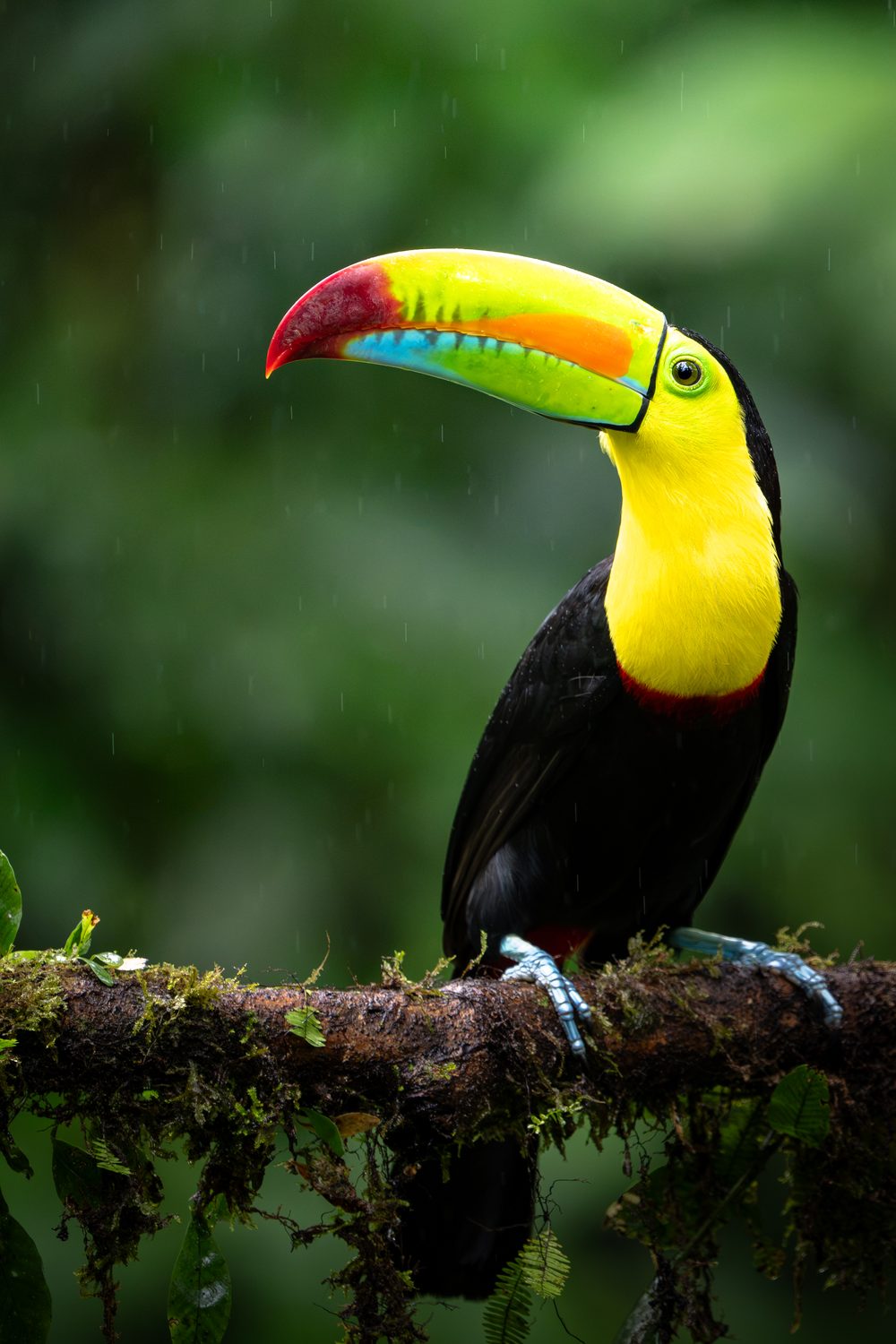
| Where fruiting trees crowd the forest edge, a different lowland resident takes over the canopy. Keel-billed Toucans move through the canopy in loose, noisy troops of six to twelve, tossing fruit into the air before swallowing it whole. Their oversized, candy-colored bill looks disproportionate for the body carrying it, but it is mostly hollow, reinforced by a foam-like internal structure that keeps it light enough to fly with while radiating excess heat, a useful trait in the humid lowlands. As frugivores that pass most seeds through undamaged, toucans are among the rainforest's more important agents of seed dispersal, spreading the very trees they feed on. |
|
 |
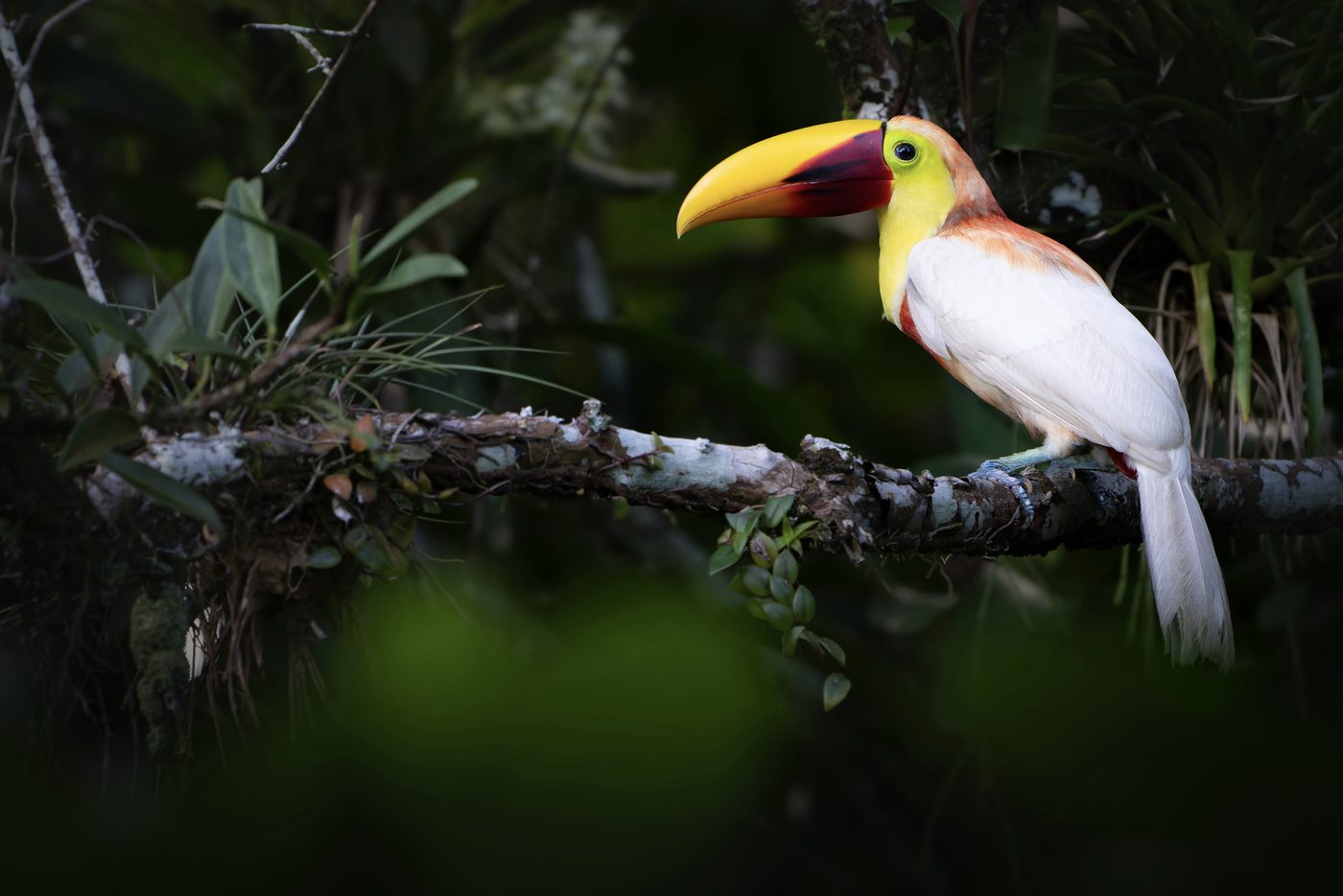
| Among those same toucan troops, a bird occasionally turns up almost entirely white. This individual is a leucistic Yellow-throated Toucan, showing a genetic condition that suppresses melanin production in the feathers while leaving the bill and eyes their normal color. Leucism differs from albinism, which removes pigment everywhere, including the eyes, and it occurs at a low, largely random rate across bird populations. Because the same plumage anomaly is unlikely to repeat in a bird's offspring, a leucistic individual is effectively a one-off, unlikely to be seen the same way twice. |
|
 |
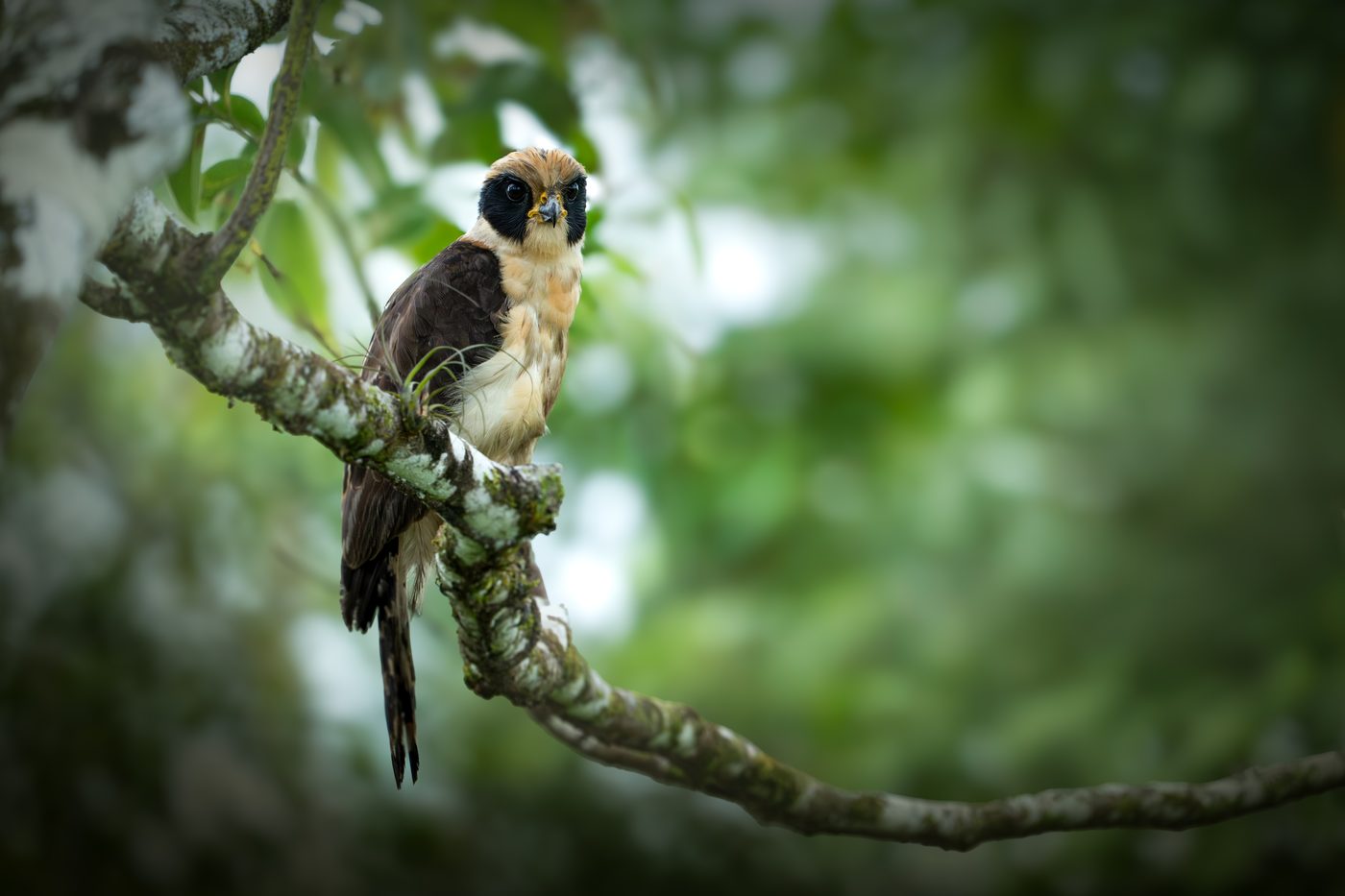
| Down at the forest edge, a very different hunter works the same lowland belt. The Laughing Falcon takes its name from its loud, rolling ha-ha-ha call, most often heard at dawn or dusk and audible well beyond the tree it is perched in; its Spanish name, guaco, is drawn from the same sound. It is a snake specialist, hunting almost exclusively reptiles by sitting motionless on an open perch for long stretches, scanning the ground, then dropping to seize prey headfirst, including venomous coral snakes and pit vipers that would kill most other predators, a tolerance researchers still don't fully understand. Its buffy head and black facial mask, which wraps around the back of the neck like a hood, make it easy to identify even in silhouette. |
|
 |
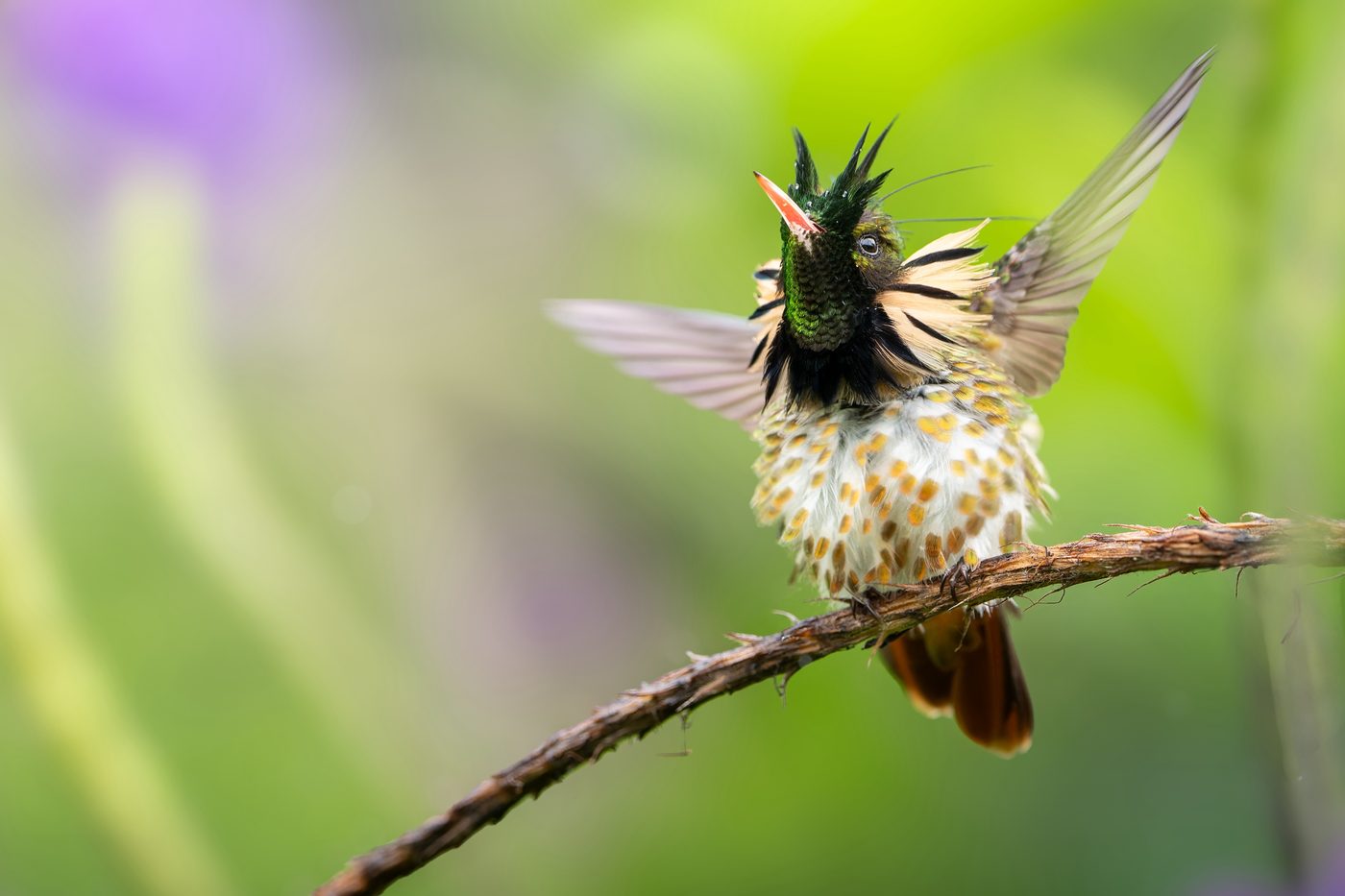
| The scale drops sharply at the forest edge as well. The Black-crested Coquette is among the smallest hummingbirds in Costa Rica, weighing barely more than two grams. Males carry a spiky black crest and a buffy, fan-like collar around the neck used in courtship display; females lack both and are easy to overlook entirely. Unlike species that hold territory at a feeder, coquettes tend to forage low along forest edges and second growth, working small flowering shrubs rather than defending a single food source, which keeps them under-recorded relative to how common they actually are. |
|
 |
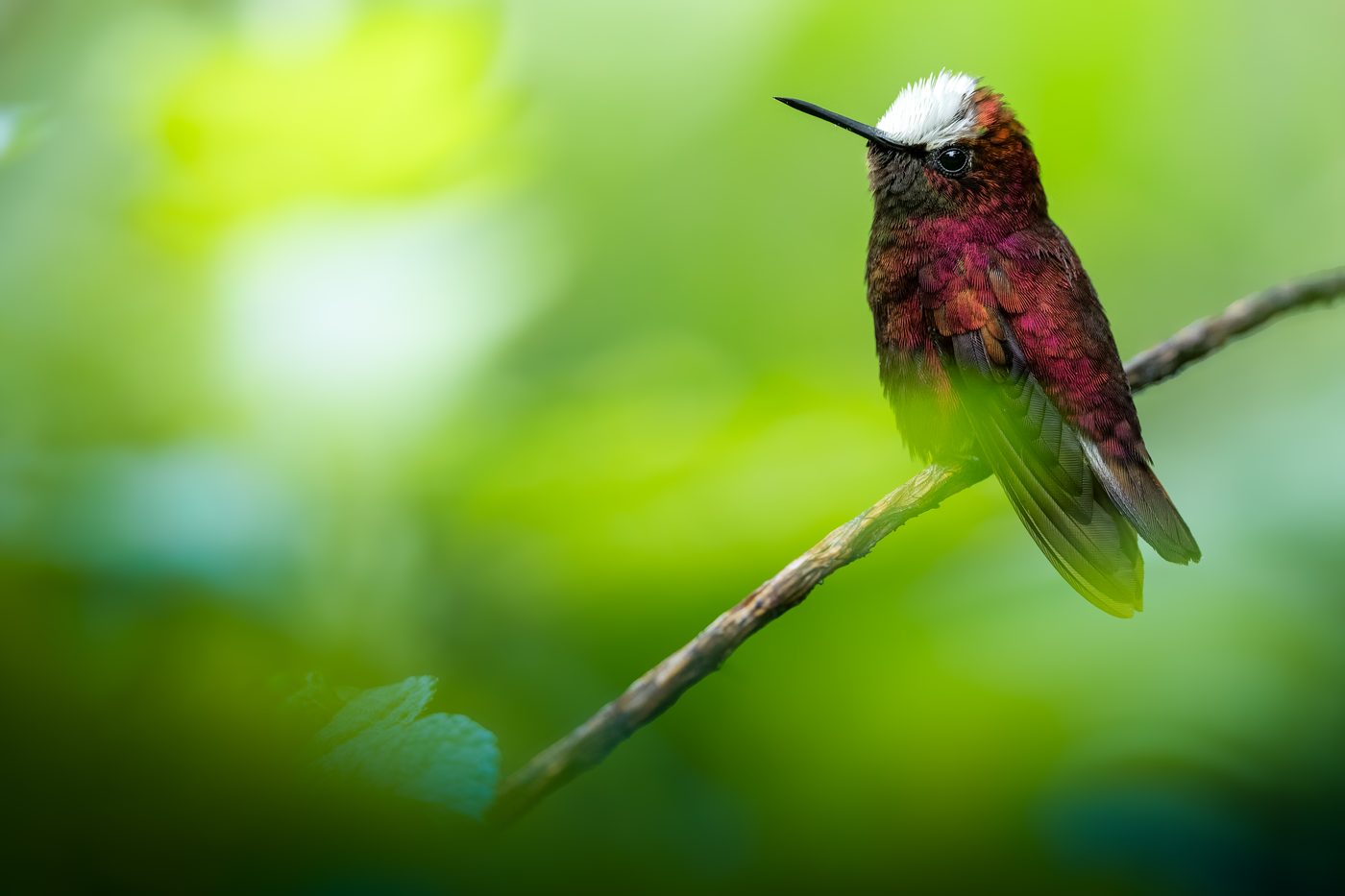
| Follow that same Caribbean slope up into the foothills and the hummingbird guild changes almost entirely. The Snowcap is restricted to the Caribbean-slope foothills of Costa Rica, Nicaragua and Panama, one of the few hummingbirds anywhere with a bright white crown set against an otherwise deep wine-purple body. Its range sits in a narrow elevation band between the humid lowlands and the cooler highlands, and the shrinking of forest corridors at exactly that elevation has made an already local species increasingly patchy across what range it has left. |
|
 |
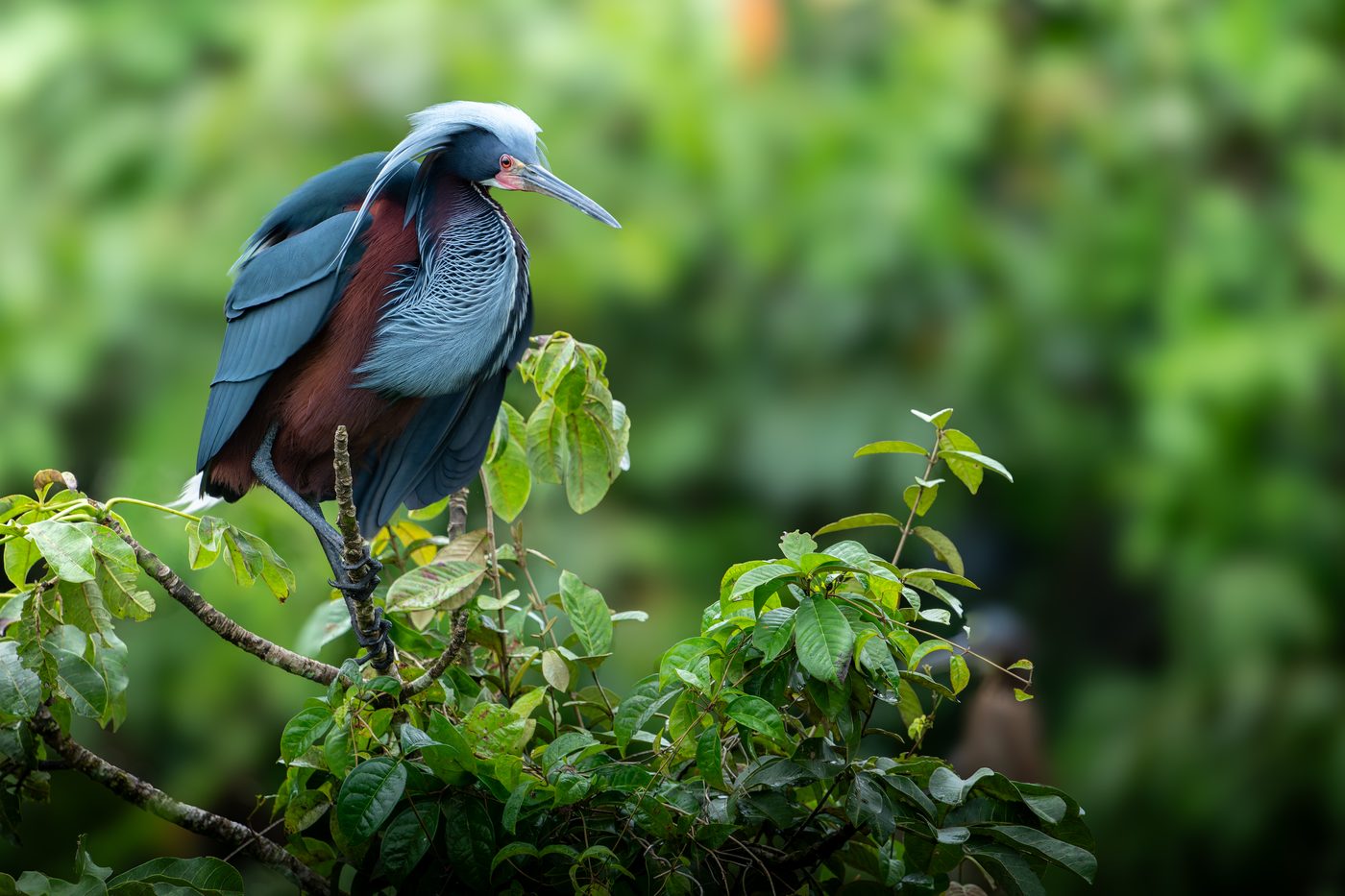
| RIVERS & WETLAND FOREST | | The same Caribbean lowlands drain into a network of slow, forest-shaded waterways, the Sarapiquí River, the wetlands of Caño Negro, the canals of Tortuguero, that demand a different kind of patience than the platforms and fruiting trees do. These are birds of slow water under closed canopy, and finding them usually matters more than the shot itself once you do. | 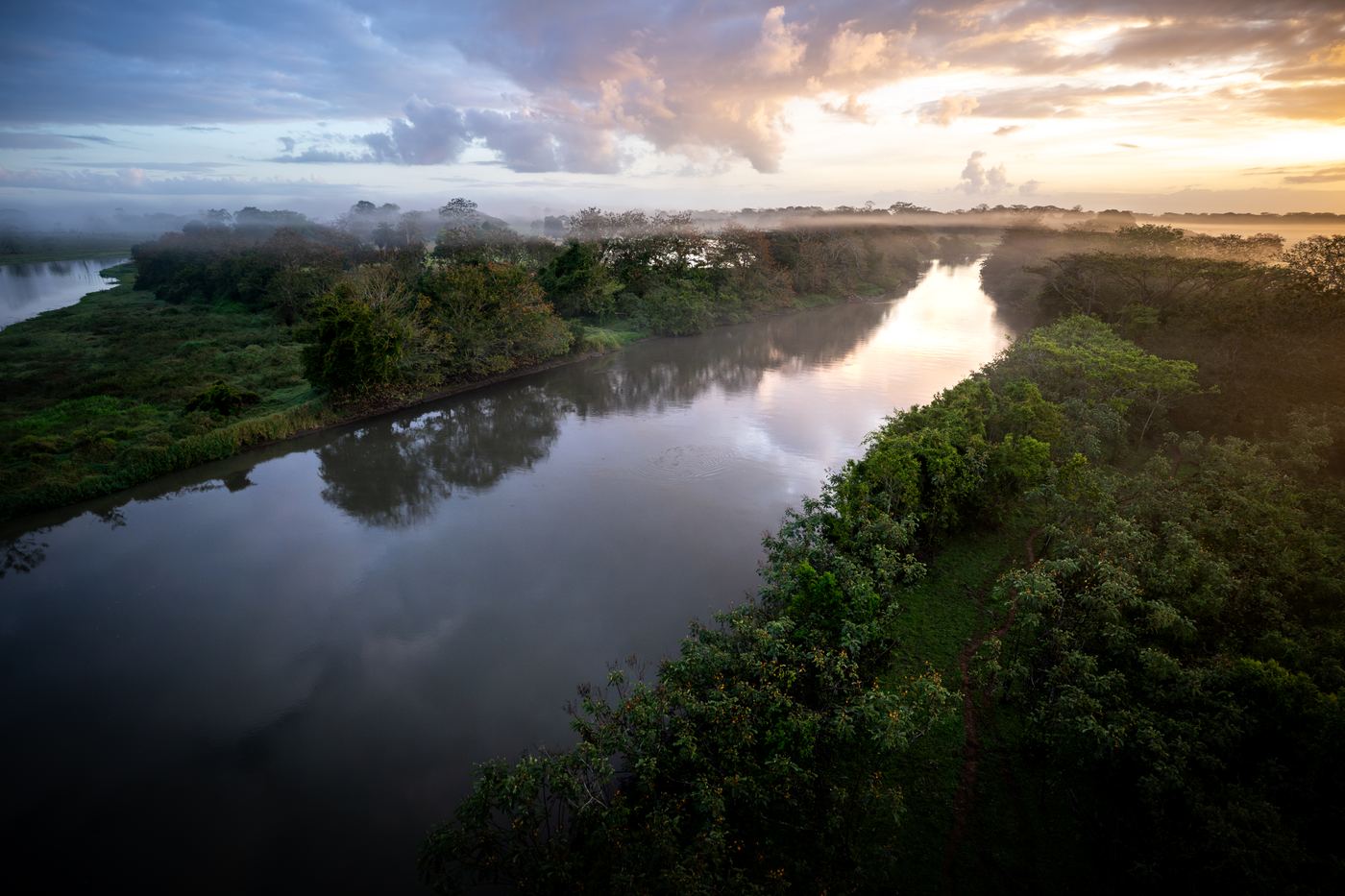 | | Where the current slows under overhanging vegetation, the bird most worth the wait is also the least likely to be seen well. The Agami Heron is widely regarded as one of the most striking herons in the Americas, with a deep maroon neck, a slate-blue back and an unusually long, straight bill adapted for spearing fish in shallow forest streams. In breeding season, adults grow fine, pale silver-blue plumes across the crown and neck, used in courtship display at nesting colonies hidden deep in swamp forest. It is a shy, solitary hunter that stands motionless for long periods under closed canopy, a habit that keeps it rarely seen despite occupying much of its historic range across Central and South America. |
|
 |
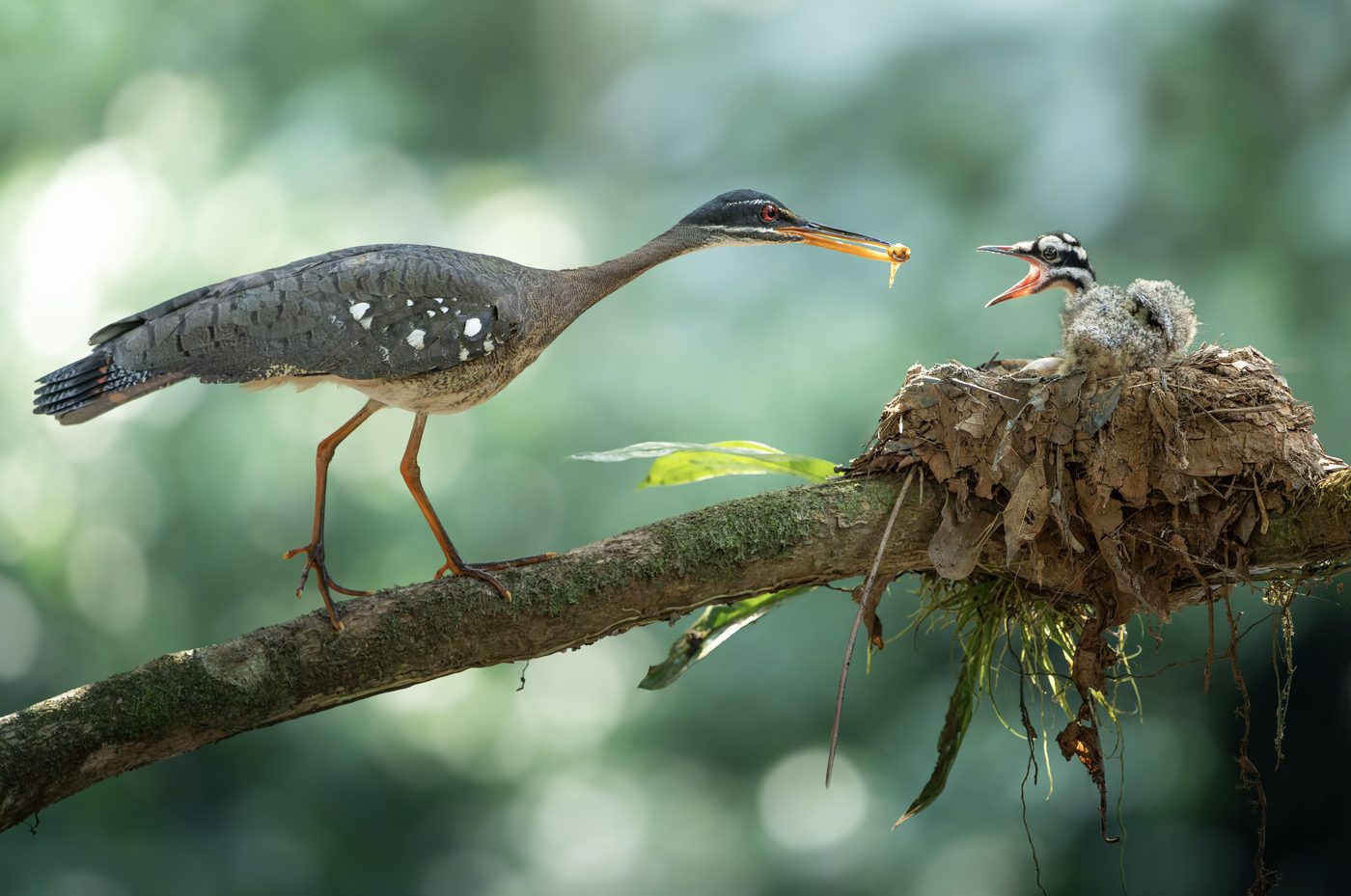
| A little further along the same stretch of river, closer to the ground than the canopy, the Sunbittern looks like an unremarkable brown wading bird at rest, but when startled or displaying it fans both wings open to reveal two large eyespots ringed in orange and black, a deimatic display thought to mimic the eyes of a much larger animal and buy the bird a moment to escape a predator or rival. It nests alone, building a shallow platform of mud and dead leaves on a mossy branch overhanging water, and both parents share incubation and feeding duties, a nest and chick documented here mid-feeding. |
|
 |
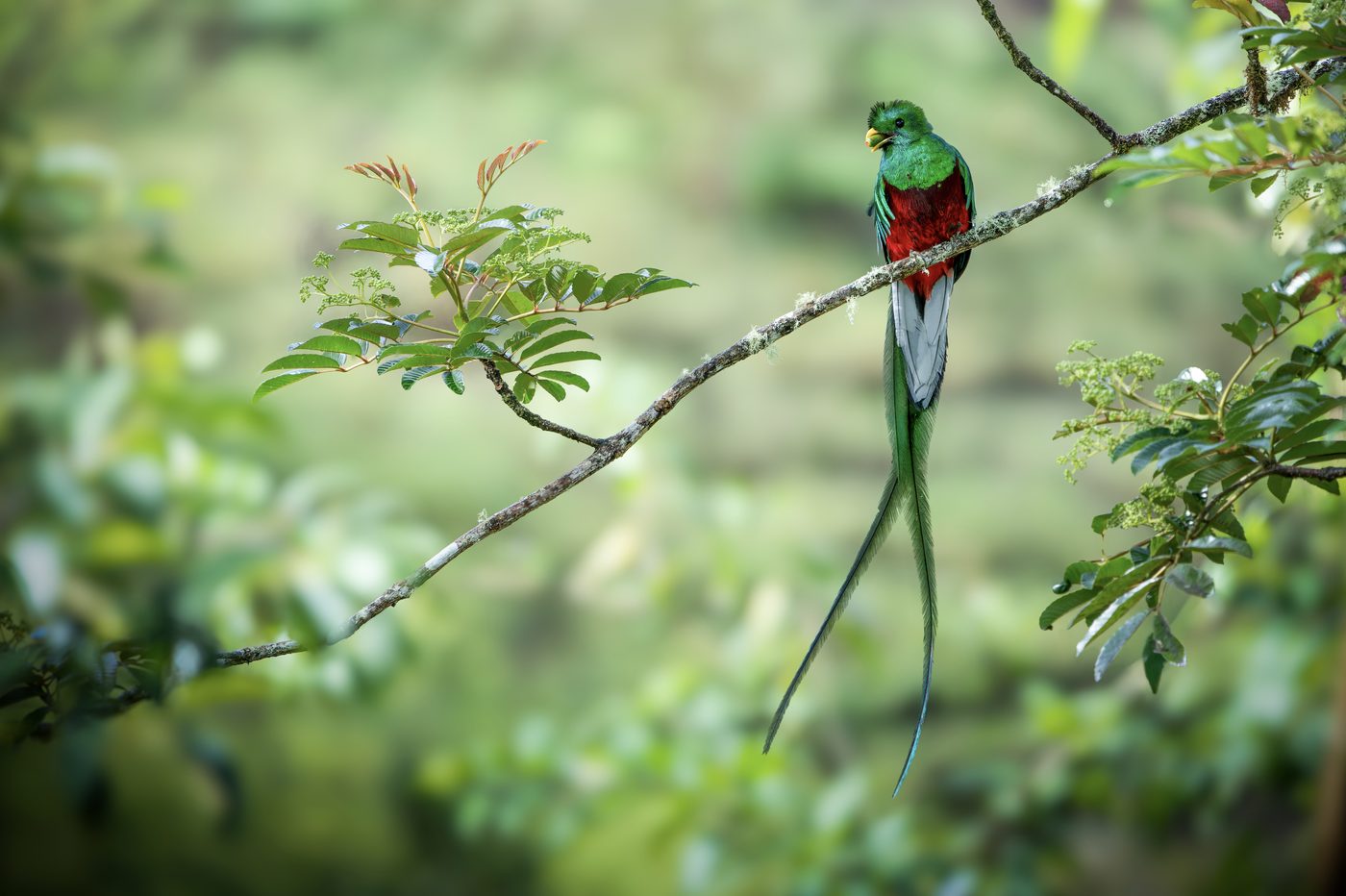
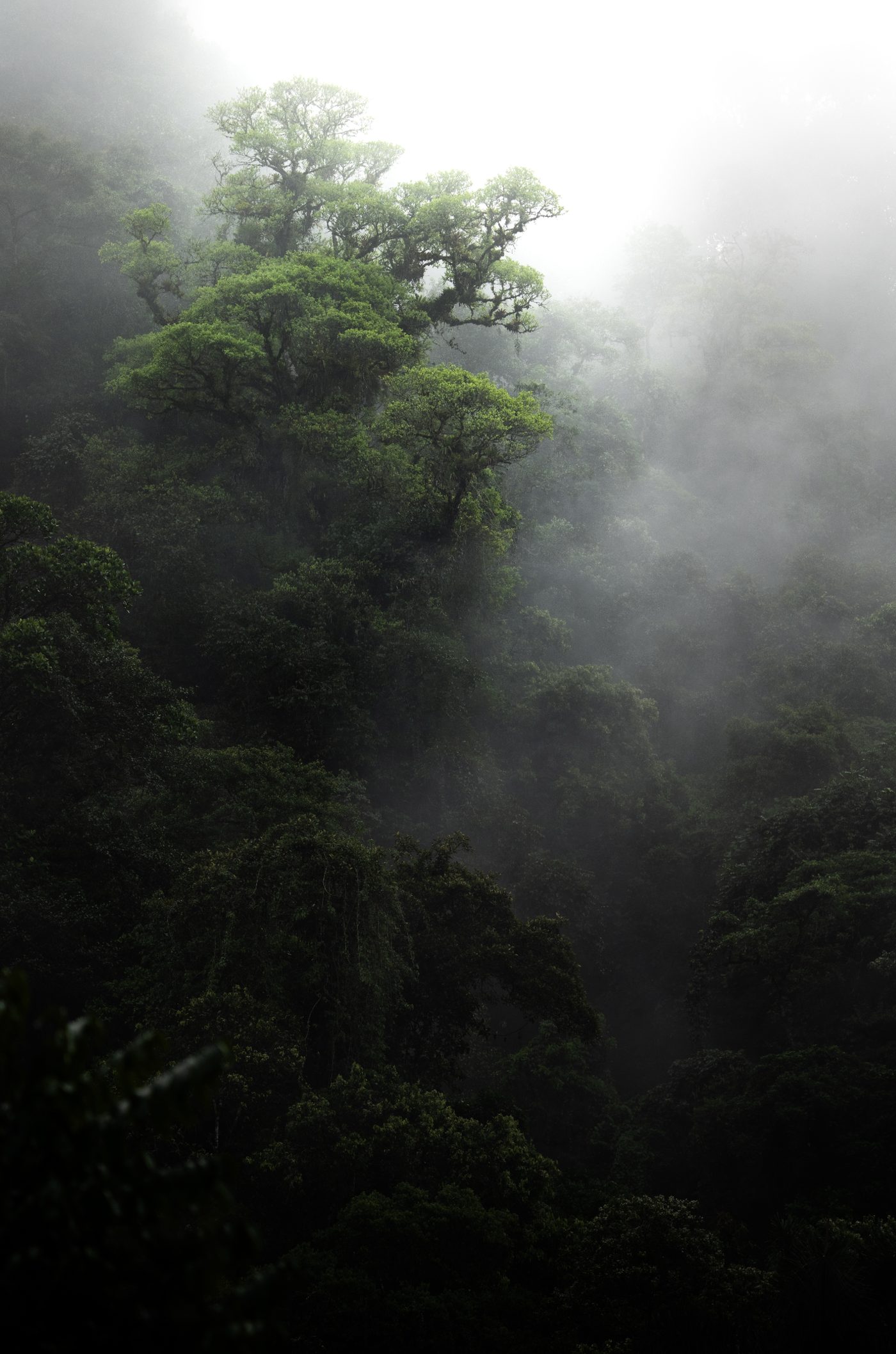
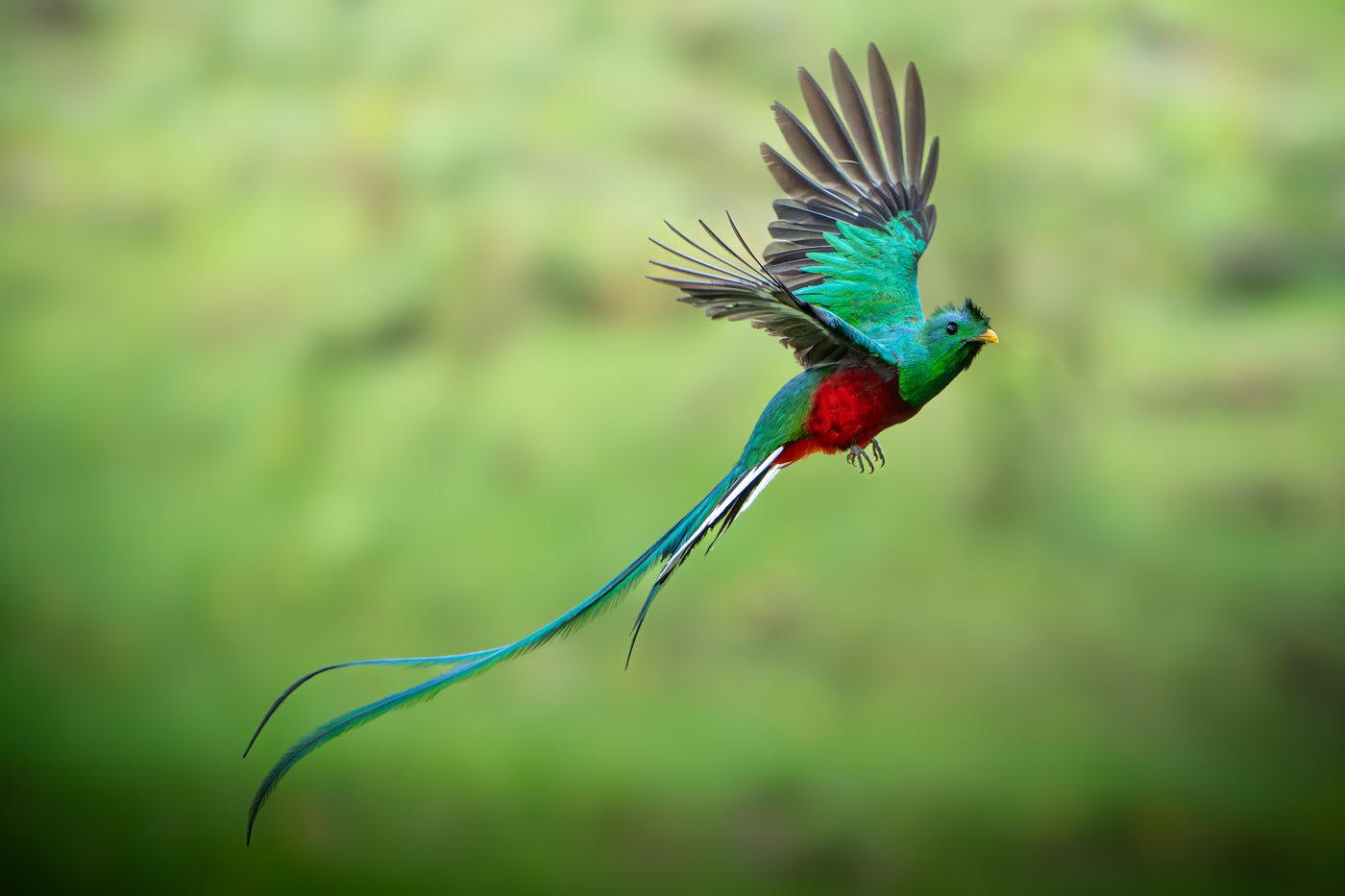
| HIGHLAND CLOUD FOREST | | Climb out of the lowlands and up into the Tilarán and Talamanca mountain ranges, where trade winds off the Caribbean condense into near-constant mist along the continental divide, and the temperature drops enough to need a jacket at 6am. Monteverde, the best known of these cloud forest reserves, has been protected since the 1970s through a coalition of Costa Rican conservationists, biologists and Quaker settlers who originally arrived from the United States seeking pasture land and ended up helping preserve the forest instead. A completely different set of birds takes over here. | 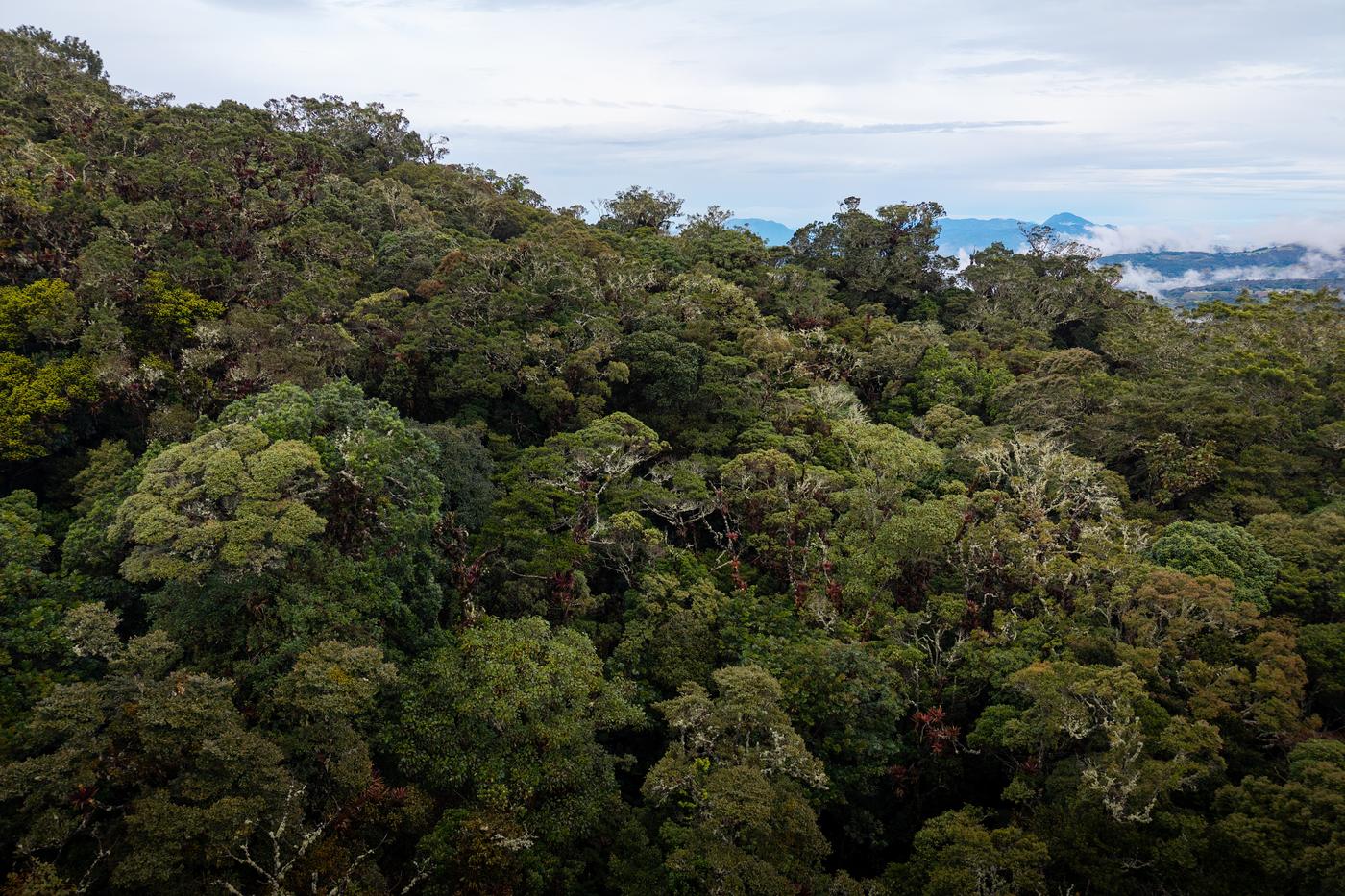 | | In these same misty ridges lives the bird most associated with the region's pre-Columbian history. The Resplendent Quetzal was sacred to the Maya and Aztec, whose rulers and priests wore its iridescent tail feathers as a mark of status and divinity; the feathers were plucked from birds trapped and released rather than killed, since killing a quetzal was reportedly a capital offense in some Maya city-states. On breeding males the tail streamer can run twice the length of the body, trailed behind in flight, and both plumage and behavior are built around timing: quetzals concentrate around fruiting wild avocado trees, swallowing whole fruits and later regurgitating the seeds intact, making the bird an important disperser of the very trees it depends on. |
|
 |
| Follow the loudest sound in the forest uphill and it usually leads to the next species. The Three-wattled Bellbird produces one of the loudest calls of any bird on the planet relative to its size, a metallic BONK audible up to half a kilometer through dense cloud forest. Males call from a fixed display perch to attract females and warn off rivals, erecting and swinging the three long black wattles that hang from the base of the bill as part of that display. The species is an altitudinal migrant, breeding in Costa Rica's highlands and moving down toward the Caribbean lowlands outside the breeding season, a pattern that has made habitat loss along its migratory corridor a particular conservation concern. |
|
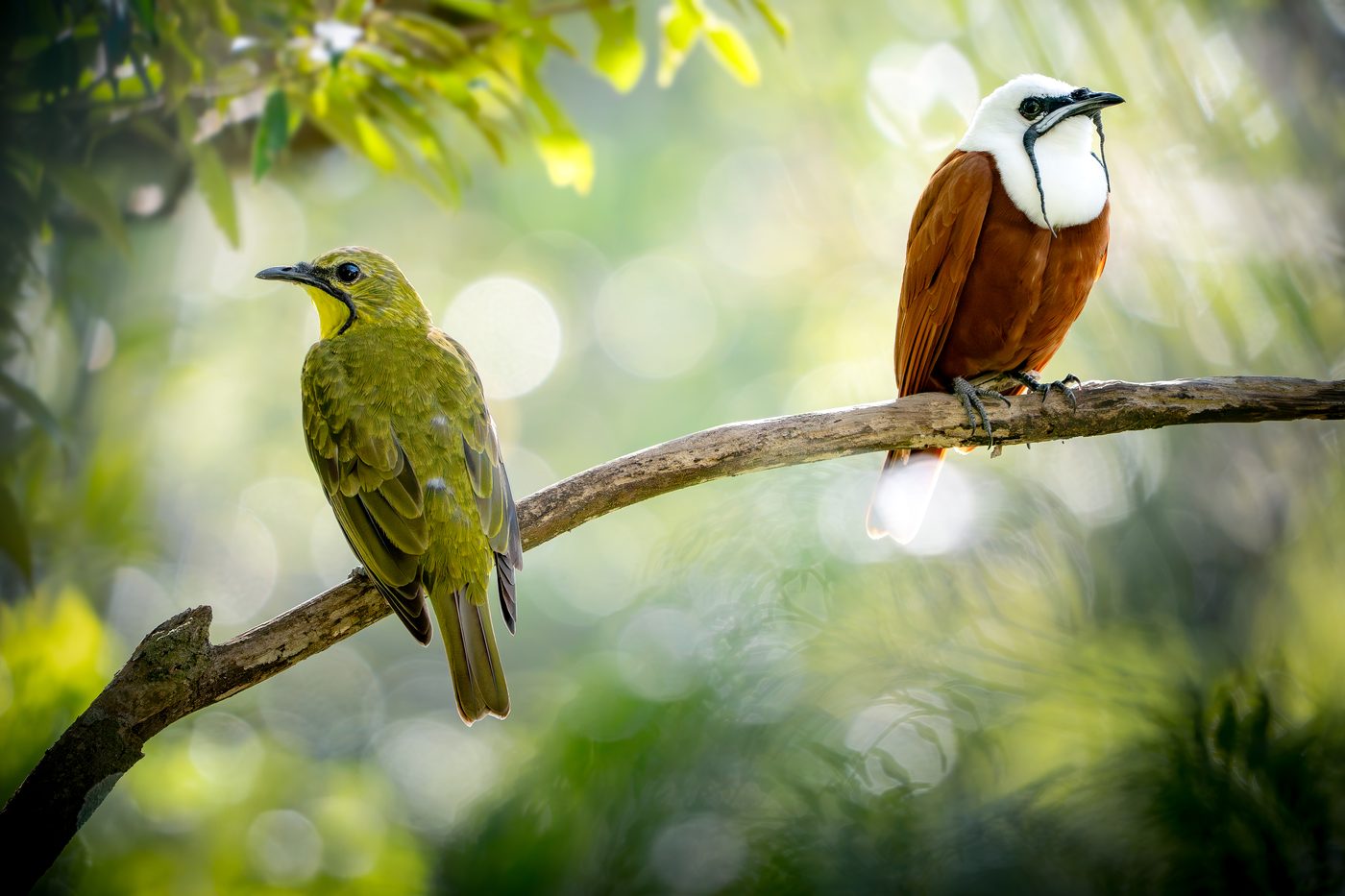 |
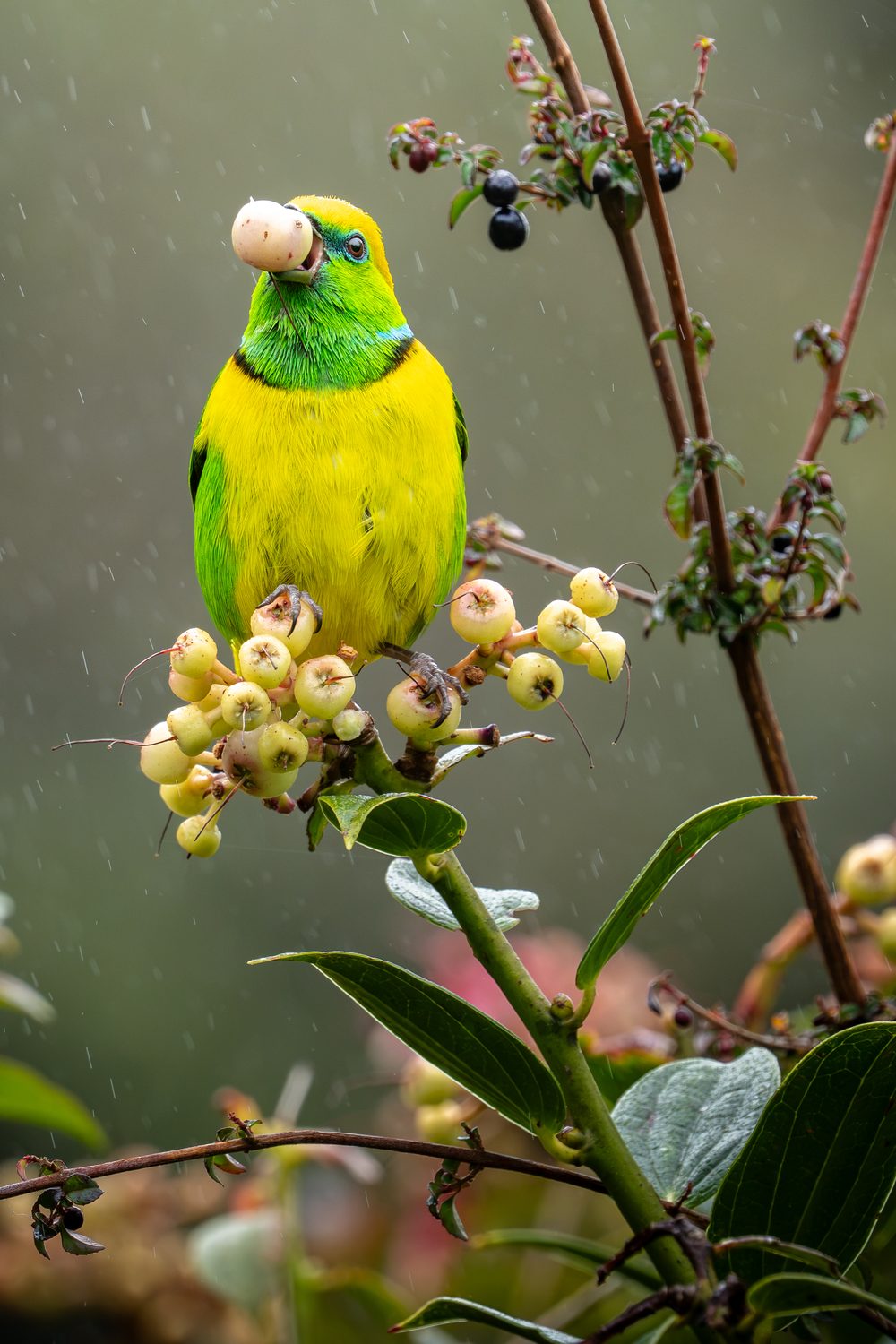
| Lower in that same canopy, moving through fruiting shrubs rather than a single display perch, the Golden-browed Chlorophonia is a small, brightly colored finch relative found only in Central American highland forest, its green, yellow and blue plumage functioning as effective camouflage against sunlit, moss-covered canopy despite how vivid it looks up close. It feeds mainly on small fruit and mistletoe berries high in the canopy, dropping to lower shrubs only when a particular plant is fruiting heavily. Like other mistletoe specialists, it plays a role in spreading that parasitic plant's seeds between host trees, passing them intact after feeding. |
|
 |
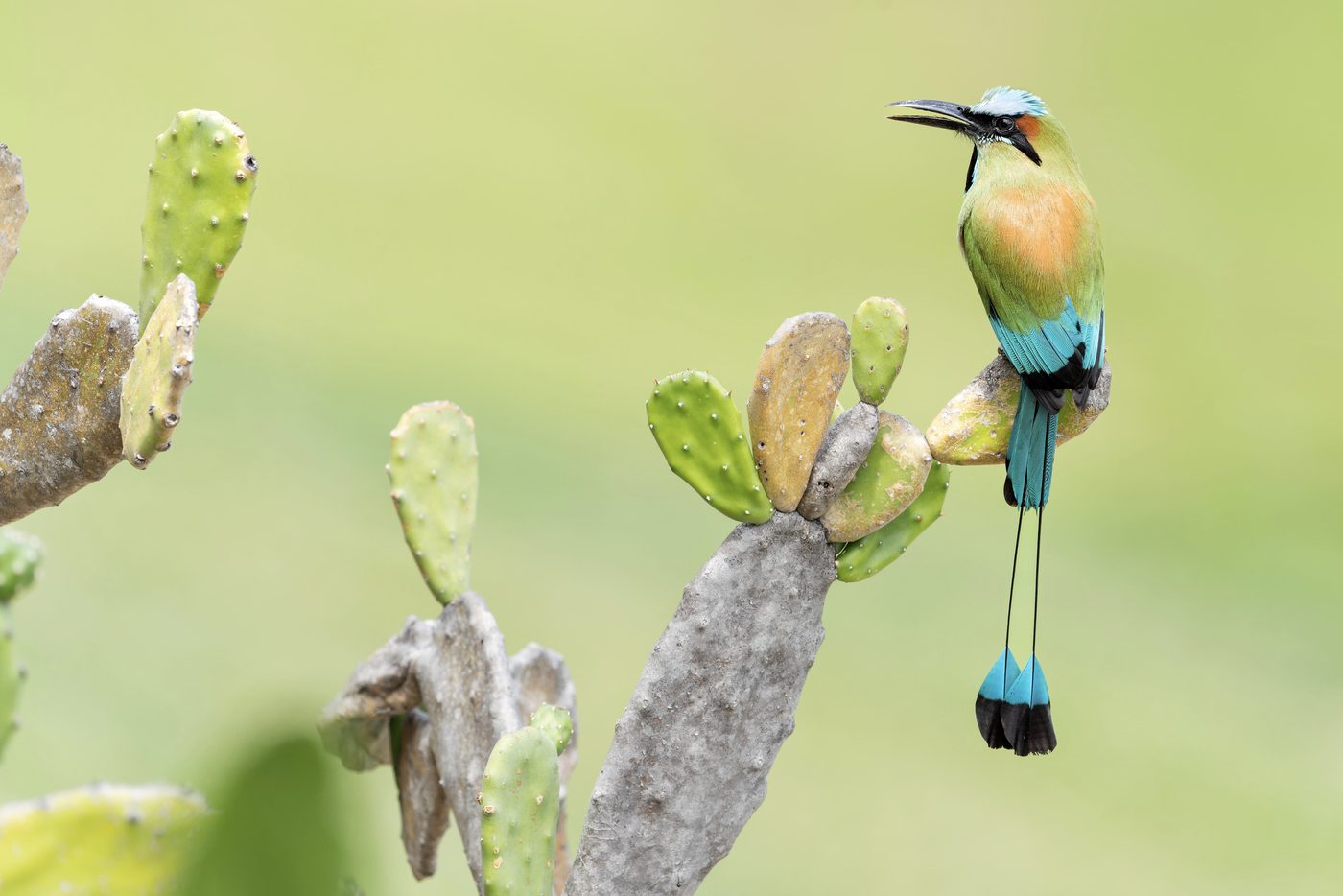
| PACIFIC DRY FOREST | | The northwest runs on a different calendar: a real dry season, trees that drop their leaves, and birds not found in the wet lowlands or the cloud forest. This is Guanacaste, historically Chorotega territory before Spanish colonization and cattle ranching reshaped the land into pasture over the centuries that followed. Its dry forest is now one of the most endangered tropical ecosystems on the planet, reduced to a fraction of its original extent, its surviving fragments anchored by protected areas such as Santa Rosa and Palo Verde National Parks. | 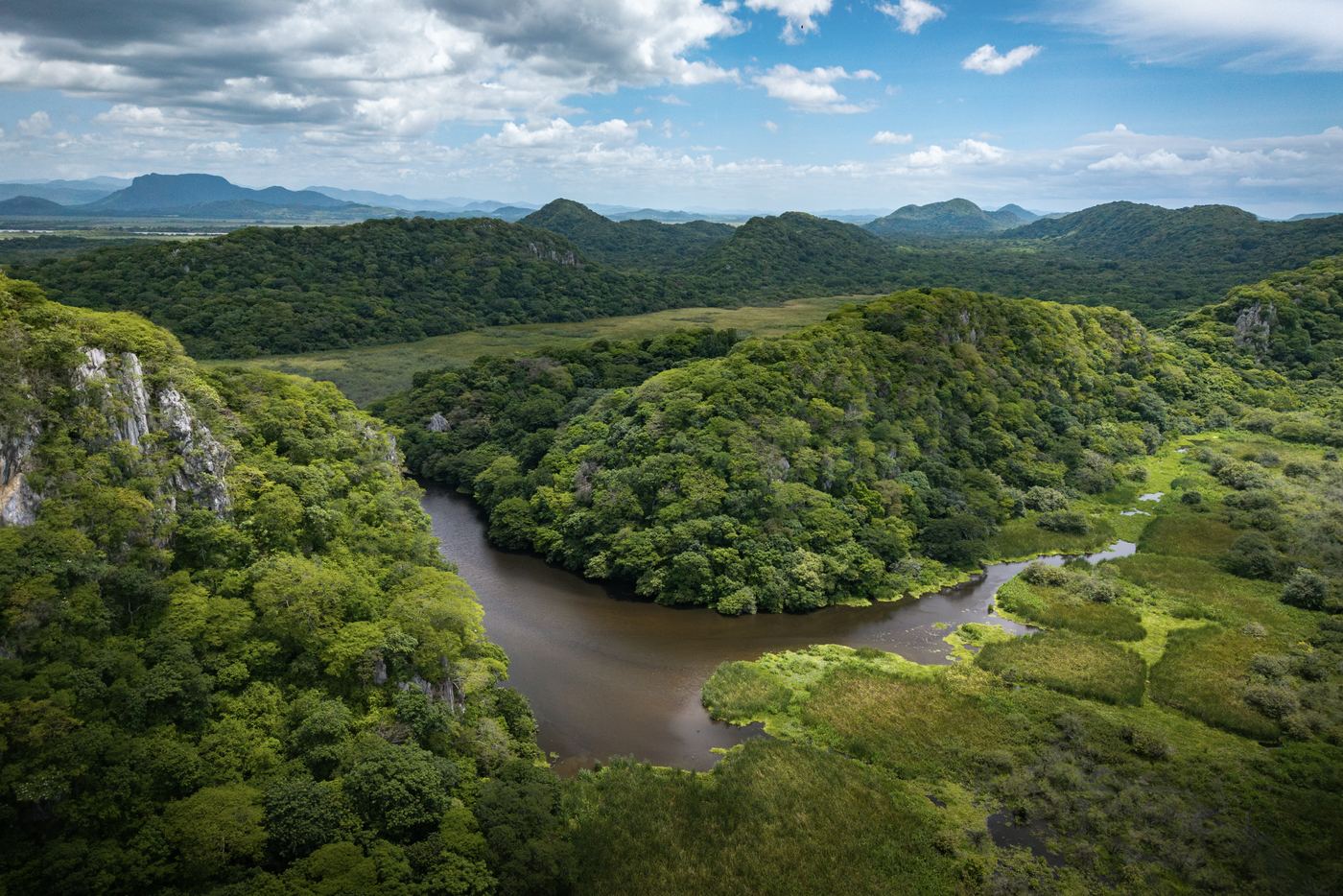 | | It is against that backdrop of cleared pasture and forest fragments that the region's signature bird thrives. The Turquoise-browed Motmot is named for the electric turquoise stripe above its eye, and it is best known for wagging its long, racket-tipped tail back and forth like a pendulum. Researchers believe the motion signals to a predator that it has already been spotted, reducing the odds of a wasted pursuit. It nests in burrows it excavates into earthen banks or road cuts, sometimes tunneling more than a meter deep, and it is the national bird of both El Salvador and Nicaragua. In Costa Rica it favors the drier forest and forest edge of Guanacaste, where cleared land and roadside banks have, if anything, given it more nesting opportunities than intact forest would. |
|
 |
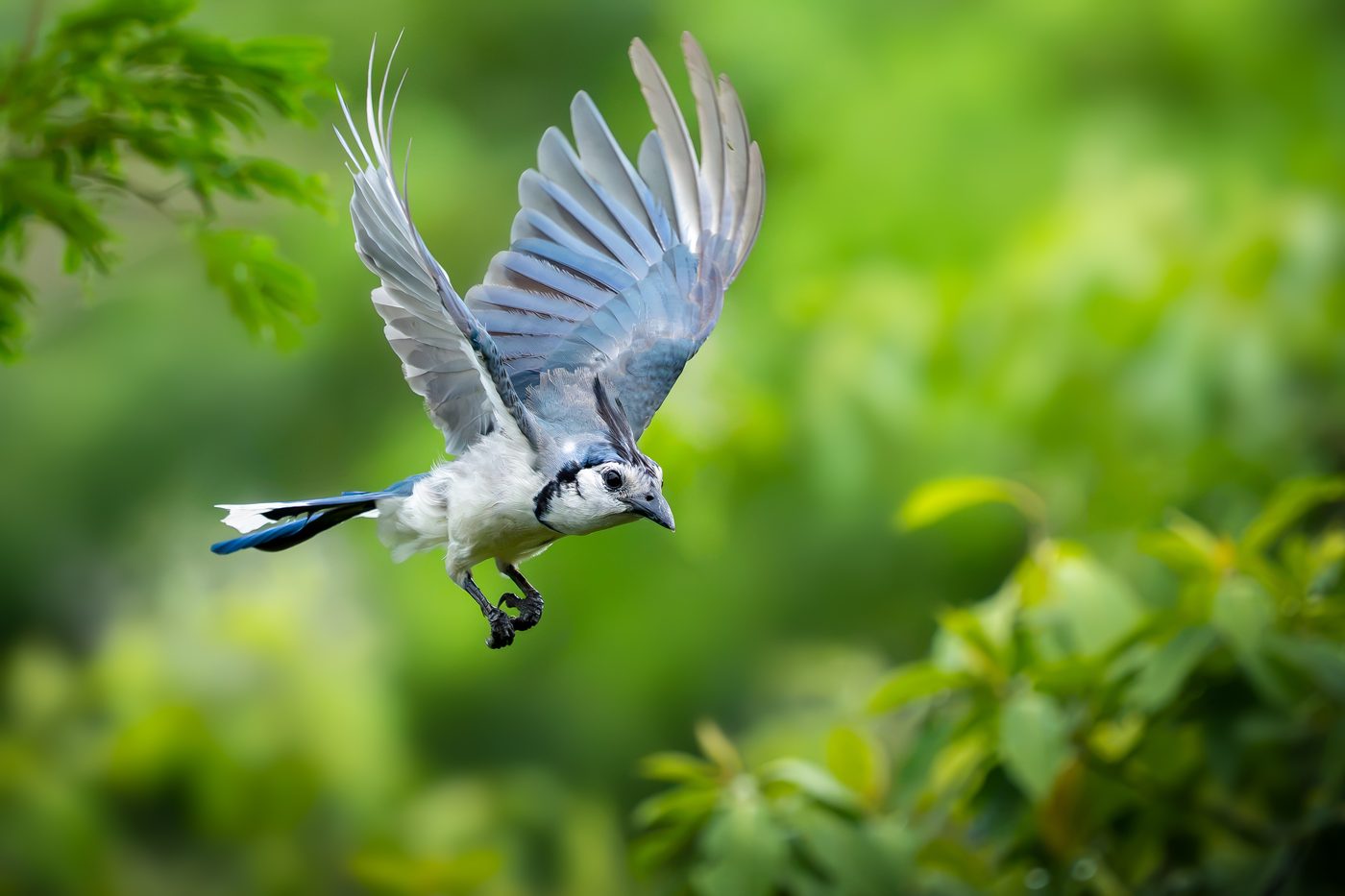
| Across that same open, dry country, a much louder resident announces itself before it is ever seen. White-throated Magpie-Jays live in extended family groups of up to a dozen birds and breed cooperatively, meaning young from previous years often stay on to help raise their parents' next brood rather than nesting on their own. Their long, curled crest feathers and elongated tail make them among the most conspicuous birds of the dry forest canopy, and the loud, varied calls that keep a group in contact usually announce its presence well before any bird comes into view. |
|
 |
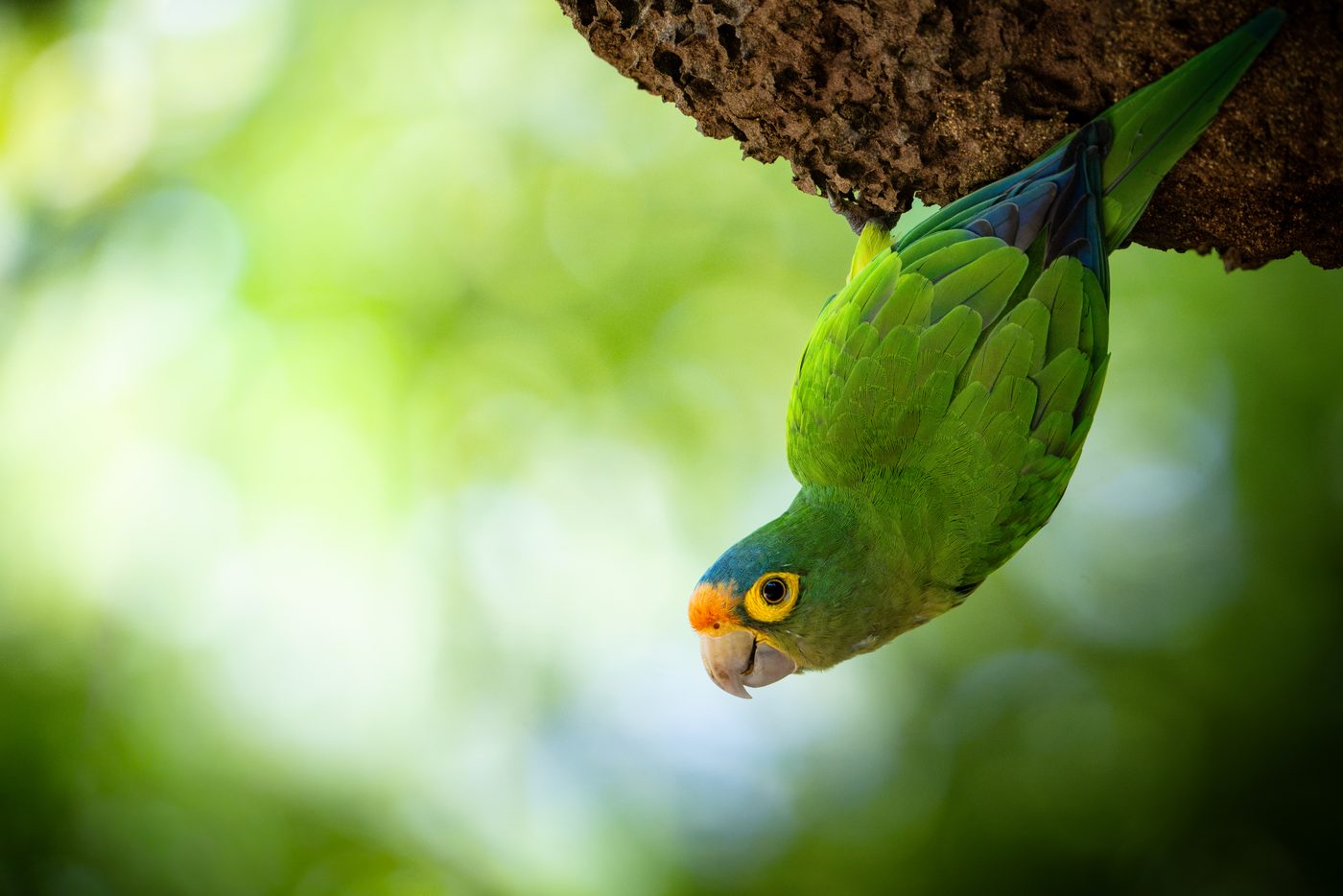
| Where forest edge meets pasture, a smaller, faster flock does the same thing at a fraction of the size. Orange-fronted Parakeets move in tight, fast flocks that blend into the canopy until they call, the orange forehead, blue crown and yellow eye-ring only visible at close range. They are unusual among parrots in excavating their nest cavities directly into active arboreal termite mounds rather than tree hollows, a strategy that may offer protection from nest predators along with the insulation the termite structure provides. Birds are often seen clinging upside down at the entrance while excavating or provisioning a nest. |
|
 |
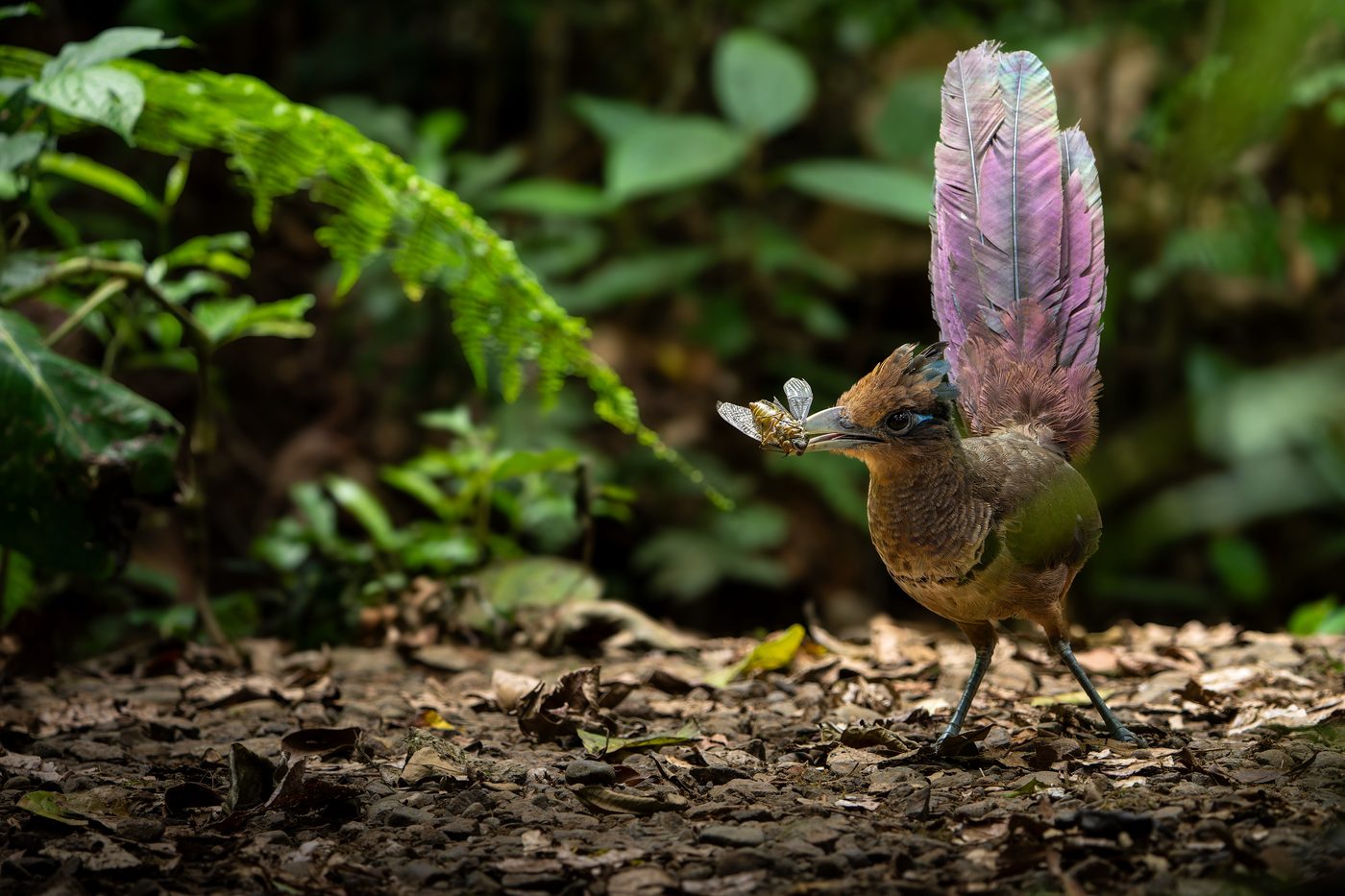
| RARITIES CAPTURED | | These last two belong to a different category: the hardest birds in the country to actually put in frame, the ones that make a good trip a great one. | | Back on the lowland rainforest floor, where army ant swarms periodically sweep through leaf litter, one resident is built almost entirely around that event. The Rufous-vented Ground-Cuckoo is considered one of the most difficult birds in Costa Rica to see. It is an ant-follower, trailing swarms of army ants across the forest floor to catch insects, spiders and small lizards flushed out by the ants themselves, rather than eating the ants, which means finding the bird depends entirely on finding an active swarm first. Its rufous crest and long, glossy tail, habitually cocked upright, are field marks rarely appreciated for long, since the bird typically slips back into cover within moments of an encounter, a cicada caught mid-swarm here one of the exceptions. |
|
 |
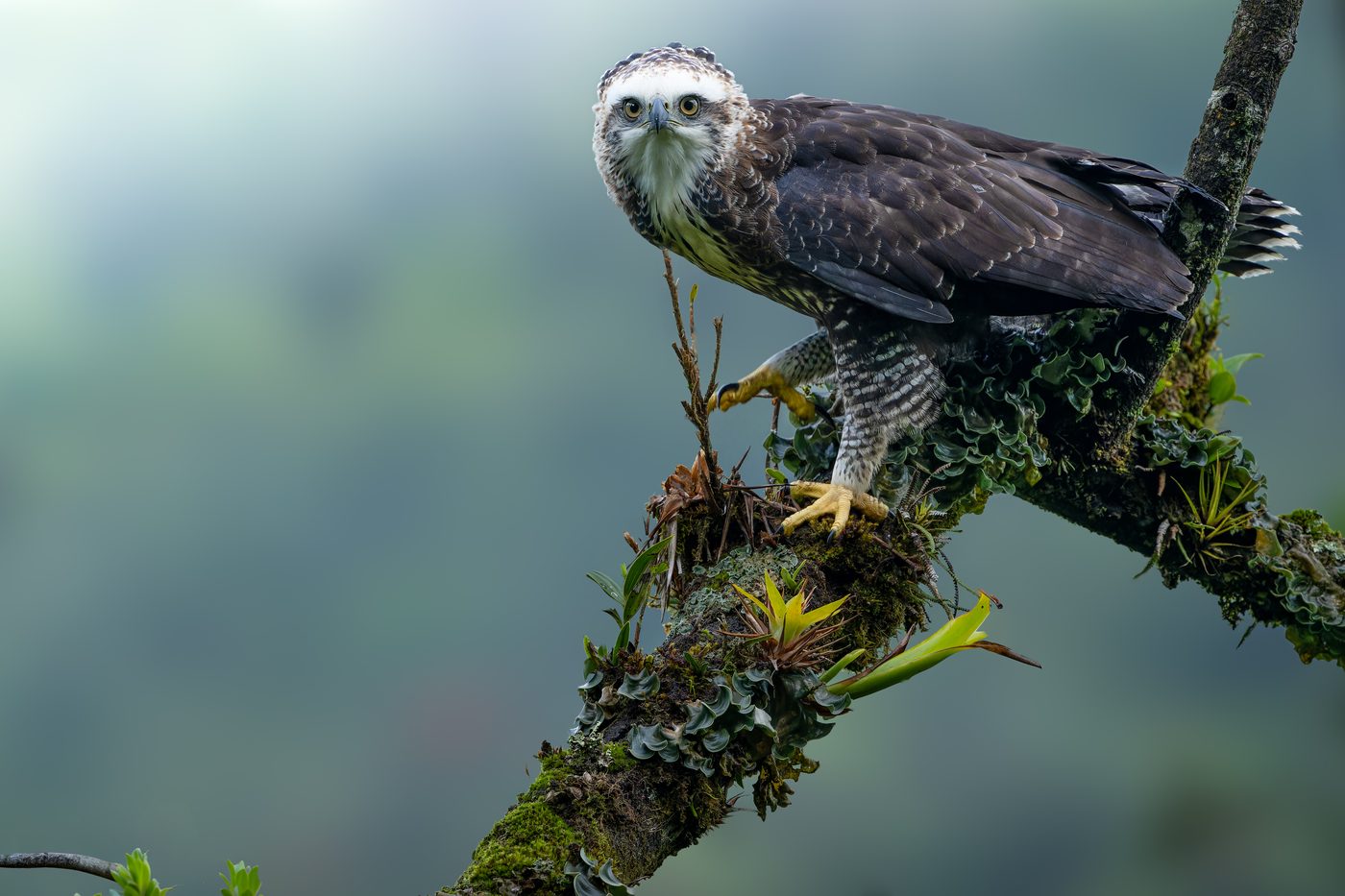
| High above that same unbroken canopy hunts the rarest raptor of the trip. The Black Hawk-Eagle, known locally as águila tirana, is a forest raptor that hunts birds and small mammals within the canopy rather than soaring in the open, which makes most sightings brief: a silhouette circling once over a gap in the trees before it disappears again. Adults are black overall with a short crest and a boldly banded tail; juveniles, like the bird pictured here, are pale-headed and heavily streaked below, taking two to three years to molt into adult plumage. The species depends on large tracts of continuous forest to hunt and breed, and its presence is generally treated as a marker of intact habitat. |
|
 |
|
|
WHAT'S GOING IN THE BAG
| |
Three pieces, built around reach and patience
| |
Bird photography runs on distance and stillness in a way big cats never demanded. Almost everything in the bag changes because of it.
|
 | BODY Sony a1 Burst speed and eye autofocus tracking are what turn a two-second window into something usable, especially on a macaw closing distance fast or a quetzal breaking cover for half a second. |
|  | SUPER-TELEPHOTO Sony 200-600mm F5.6-6.3 G Lives on the camera for nearly every session. Enough reach to frame a quetzal thirty meters up a fruiting tree without pushing closer and flushing it, still light enough to hand-hold through a full morning at a feeder platform. |
|  | SUPPORT Tripod + Gimbal Head Two hours motionless at a feeder platform or a fruiting tree is a different demand than tracking a cat from a moving boat. This is what makes holding 600mm steady that long actually possible. |
|
|
|
APRIL 2027
| |
Eleven days, three ecosystems, one long lens. Come chase it with us.
| |
One departure is open, April 19 to 29, 2027, timed for Quetzal breeding season. Groups run small, one to six travelers, with a private 4x4, dedicated guide, and all lodging, meals and park fees included.
| | |
$550 deposit to hold your seat · Questions first? Just reply to this email.
|
|
|
|
NEXT IN THE FIELD JOURNAL
| |
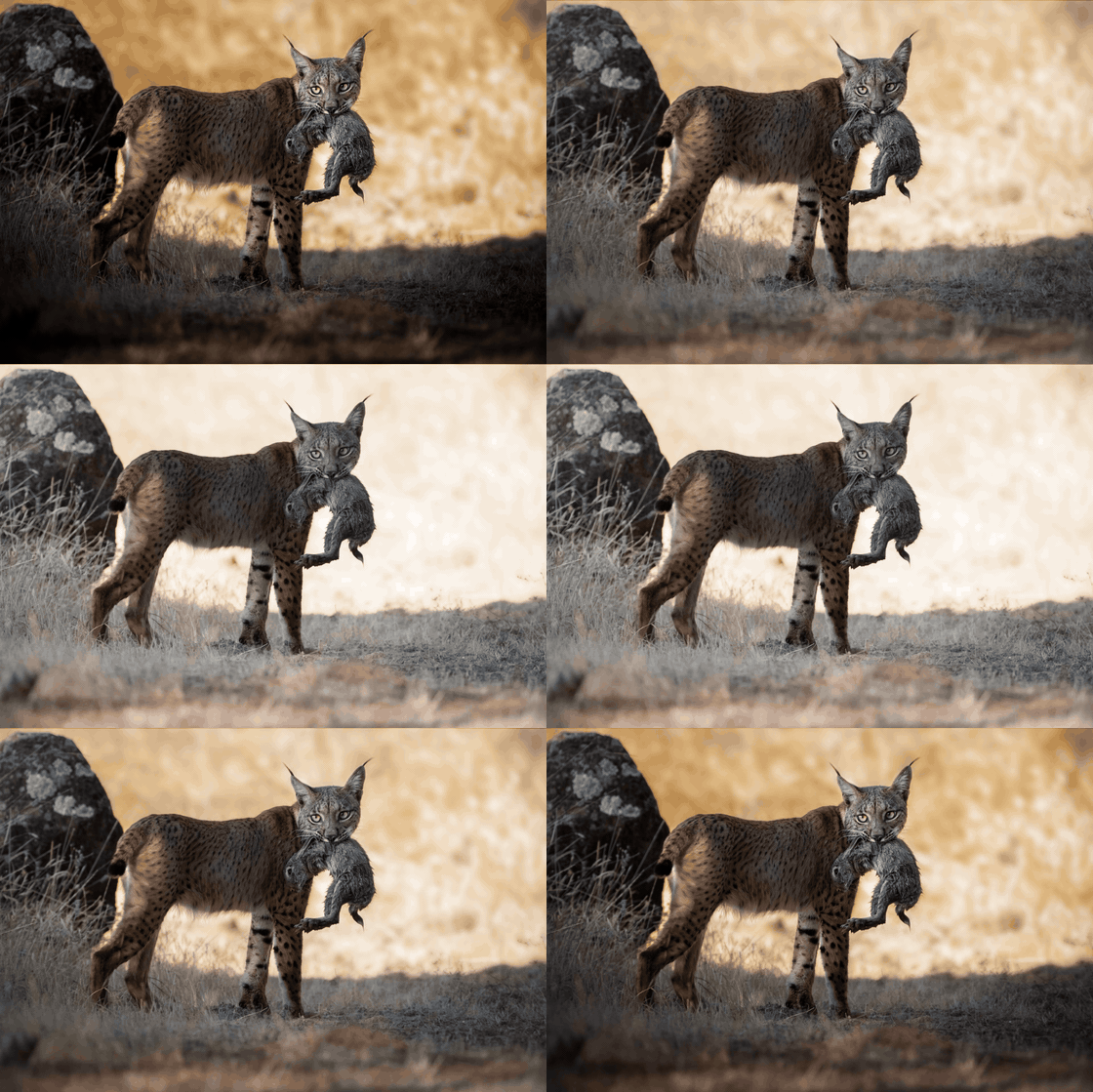
Behind the edit: how a RAW file actually becomes the photo you see
| |
Up next in the field journal: the real workflow behind turning a RAW file into something worth printing.
|  RAW → FINAL |
|
|
PHOTO∗LIOR
|
WILDLIFE PHOTOGRAPHY TOURS & WORKSHOPS
GUANACASTE, COSTA RICA
| |
AS FEATURED IN: NATIONAL GEOGRAPHIC · WILDLIFE PHOTOGRAPHER OF THE YEAR · SONY WORLD PHOTOGRAPHY AWARDS
| | @photoliorphotolior.comReply to this email | |
You're receiving this because you subscribed to PhotoLior field journal updates.
Unsubscribe |
|


